Bootstrap
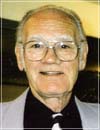
Scott Richardson

The Plague Upon Pharaoh

Exodus 11:1
Scott Richardson August, 11 1996 Audio
0 Comments

Sermon Transcript

Auto-generated transcript • May contain errors

100%
Turn with me to the eleventh
chapter of the book of Exodus. Exodus chapter eleven. And the Lord said unto Moses,
verse one, the book of Exodus. And the Lord said unto Moses, the voice of God. Moses heard
the voice of God, and he acted accordingly. Did what God told him. No questions. Just obeyed God. The Bible says Abraham, who was
the father of the faithful, believed God. He just believed
God. Moses, the meekest man upon all
the earth, heard the voice of God and obeyed God. He delivered the message and
said unto Moses, Yet will I bring one flag more." Yet will I bring
one flag more upon Pharaoh and upon his land and upon Egypt. One flag more. Well, we're all
familiar with the story that Moses slew an Egyptian and covered him up in the sand.
And he was found and Moses was discovered to be the culprit
that brought about the death of the Egyptians. Moses fled
into the back side of the desert and there stayed for forty years. God appeared unto him. and told
him that he'd heard the cries of the children of Israel as
they labored in the brick kilns of Egypt as slaves. He had a message for Moses to
deliver unto Pharaoh. He said, You tell Pharaoh to
let my people go. Old familiar story. We've heard
this story from the time we were children. Went to Sunday school.
Let my people go. Let them go. They got to let
God's people go. Nothing can hinder or thwart the eternal counsels of God.
Nothing can thwart His purpose. What God purposes to do in eternity
will be brought about here in time. God said, Let My people go. And,
of course, Pharaoh hardened his heart, and yet it says that God
hardened his heart. and real desire of Pharaoh was
seen in his rebellion against God. So he hardened his heart, and
God hardened his heart. And I certainly am not going
to argue with anybody about God hardening that man's heart. Any
fool can argue against God, but God will have His way regardless
of my arguments, and my arguments are very punitive. In that eighth
chapter, the Lord spake unto Moses, the first verse, and said,
Go unto Pharaoh, and say unto him, Thus saith the Lord. This is what the true and the
living God says. Let my people go, that they may
serve me. And I read to you in verse 11,
or I mean in chapter 11 and that first verse, where the Lord said
unto Moses, Yet will I bring one flag more. upon Pharaoh and
upon Egypt. But he begins in verse 8 with
the beginning of the flags, Let my people go, if they refuse. If Pharaoh refuses to let them
go, behold, I will smite all thy borders with frogs, and the
river shall bring forth frogs abundantly, which shall go up
into thine house. frogs. God, who made the frogs, can
direct the frogs to accomplish His purpose. "...which shall go up and come
into thine house, and into thy bedchamber, upon thy bed, and
into the house of thy servants, upon thy people, and into thine
ovens, and into thy kneading and the frogs shall come up both
on thee and upon thy people and upon
all thy servants." And this is exactly what happened. Over and
over and over. The plagues fell upon Pharaoh
and his land. Verse 22 of that eighth chapter
says, And I will sever in that day the land of Goshen, in which
my people dwell, that no swarm of flies shall be there. To the
end thou may knowest that I am the Lord in the midst of the
earth, and I will put a division between my people and thy people. Tomorrow shall this sign be."
And the Lord did so, and there came a grievous swarm of flies
into the house of Pharaoh. It started out with frogs. Frogs
everywhere must have been a terrible thing. Now it's flies. bothersome is one fly. I chased one over in the building
there this morning, all over the building, in order to kill
that fly. I can't stand that fly buzzing
around me. I've got to kill him. But what
if you had a grievous swarm of flies? Flies in the house of Pharaoh
and in their servants' and into all the land of Egypt. The land
was corrupted by reason of the swarm of flies, over and over
and over. And come back now to this text
here, verse 1 of chapter 11. One more heavy blow, one more
plague. Moses, yet will I bring one flag
more upon Pharaoh and upon Egypt." One more heavy blow. This is a heavy blow. One more
heavy blow must fall upon this hard-hearted monarch. Not only upon him, but upon the
land of Egypt. he will be compelled to let these
favored people go. One more flag has got to fall
upon them before he'll give in, before he'll be compelled to
let my people go. One more flag. Now, how utterly
useless for man to harden and exalt himself against the true
and the living God. When the true and the living
God can grind to powder and to dust his enemies, even the hardest
heart, God can deal with him. He can grind that hard heart
to dust. In the Bible, in the book of
Daniel, in the 4th chapter and the 37th verse, it says, those
that walk in pride, God is able to abase. Now, man may think
he is somebody, and most men do. We live in a time in this
generation when men think that they are somebody. They lift
up their head in pomp and vain glory as though they were their
own master. Foolish men! They know nothing
of their real and true condition and character before God. If
they did, they would submit to the Word of God and to the voice
of God, but they're foolish. They're fools. No man is his
own master. He's either governed by the Lord
Jesus Christ or he's governed by the devil, one of the two.
Now, Pharaoh here had enough light to know and enough light
to show him the foolishness of his actions in seeking to detain,
seeking to keep in captivity those whom God had commanded
him to let them go. Now, he had enough light to know
that he ought to do what God told him to do. But he had a
hard heart. You see, the real bent, the real
thrust of his heart was against God. That was his real desire,
that he was a rebellious, hard-hearted monarch who thought he was somebody,
thought he was his own boss. thought he was his own master. Now, God, who made the heart
of man, knows the heart of man and knew the real bent of his
desire was against God. Therefore, God left him to himself,
just left him to his own lust and desire and pleasure. Let him go. There's a verse of
scripture over here that I want to read to you in the book of
2 Thessalonians. It'll give you some idea of what
I'm talking about and the directions that I'm going. In 2 Thessalonians chapter 2, Verse 8 says, And then shall
that wicked be revealed, whom the Lord shall consume with the
spirit of his mouth, and shall destroy with the brightness of
his coming, even him whose coming is after the working of Satan,
with all power and signs and lying wonders, and with all deceivableness
of unrighteousness in them that perish, Now listen, because they
received not the love of the truth that they might be saved,
and for this cause God shall send them strong delusion that they should believe a lie,
that they all might be damned who believed not the truth but
had pleasure in unrighteousness." In other words, if men will not
have the truth when it's put before them, then surely they'll
have a lie. A great delusion. Those, he said,
because they've received not the love of the truth, that they
might be saved. For this cause, God will send
them a strong delusion that they might believe a lie. Now, if
they will not have God's Christ, and I'm not just confining this
to the Egyptians and their monarch. When I say, if they will not
have God's truth, I'm saying that to all of us. I'm saying
that to every man, every woman, and every boy and every girl
who makes up Adam's race. I'm saying if they, when the
truth is set before them, if they will not have the truth,
God will send them a delusion, and they'll believe a lie, is
what he says. If they will not have God's Christ,
they shall have the devil. They shall have Satan. If they
will not have heaven, they shall have hell. That is
the short of it. One plague more, he says, one
plague more. After all these plagues had been
dispelled on Pharaoh and on Egypt, yet this hard cold-hearted monarch
who was against God and everything that God stood for would not
yield to the command as it came from the lips of Moses who received
it from none other than the true and living God. It will be one
plague more. This one plague more signed the
death warrant. for the firstborn of Egypt. One flag more. About midnight, he said. Let
me read that in that eleventh chapter. fourth verse. And Moses said, Thus saith the
Lord about midnight, Will I go out into the midst of Egypt? And all the firstborn in the
land of Egypt shall die from the firstborn of Pharaoh that
sitteth upon his throne, even unto the firstborn of the maidservant
that is behind the mill, and all the firstborn of the
beast. And there shall be a great cry
throughout all the land of Egypt, such as there was none like it,"
nothing like this ever happened before, "'nor shall be like it
any more.'" But against the children of Israel shall not a dog move
his tongue against man or beast, that ye may know how that the
Lord doth put a difference between the Egyptians and Israel." One
plague more, it signed the death warrant of Egypt's firstborn. About midnight, he said, there's
going to be death in every house, in every house in Egypt. Now just think of that. This was a large country with
a large population. And this last flag, this death warrant,
is going to be in effect about midnight, and there's going to
be a death in every house, from pharaohs down to the maidservant
behind the mill, about midnight. And it gives this reason. that
ye may know that the Lord hath put a difference between the
Egyptians and Israel." Notice that expression, verse 7, that
ye may know how the Lord doth put a difference between the
Egyptians and Israel. It is the Lord alone. It is Jehovah God. It is the true and the living
God who can put a difference between those who are His and
those who are not His. It is the Lord alone. It's not your decision. It is
not what is referred to as freewillism. It is the Lord Himself alone
that makes the difference, because He puts the difference between
the Egyptians and the Israelites. And when God puts the difference,
We are bound to inquire, what is that difference? Huh? We're bound to ask that question. Here's a nation of people here,
and here's another nation of people here, and God brings down
His wrath upon this nation, and kills the firstborn of every
household from the king down to the littlest servant. And on this nation not a dog
shall wag its tail or bark at one of those. The Lord alone,
He's going to do this to this nation that they might know that
the Lord have put a difference. There's a difference. And we're
bound to ask, what is that difference? And that's the burden of my preaching
here this morning. What is the difference? In the case before us here, between
Israel and those Egyptians, we see it is but a simple question
of life and death. Live it or die. Well, this is a wonderful difference,
I think. He draws a line here of de-embarkation. He draws this line, and on one
side of this line is life. And on the other side of this
line is death, life and death. How many would be affected in
that nation? Every household. There would
be cries of anguish all over the land of Egypt. Now, many
of the Egyptians, firstborn, certainly might have been fair
and attractive as those of Israel, and maybe more. But Israel had light and life
founded upon God's eternal counsels of redeeming love, established,
as we shall see here presently, by the blood of the Lamb. Nothing was to be seen in the
land of Egypt but death. One more flag. I'll put one more
flag on this monarch and his people, and they'll let my people
go. One more flag. That flag, when
it developed, nothing was seen in that land but death. Every
house had a funeral. We think it's something when
two or three people get killed in a car crash or an airplane
blows up in the sky and three hundred and some people are wiped
out by sudden death. But what about thousands and
thousands and thousands of people? What about every home in the
land of a large country with a large population? Funerals
all over the land. Death. Death. Nothing was to be seen but death,
and nothing was to be heard but the cries of bitter anguish coming
from the victim. Ah, it was a terrible time. But
God, you see, knows how. And He's not limited in strength
or in power to bring down the hardest of hearts and make them
five and make their hearts agreeable and make their rebellious will
willing. It's not hard for God. The Bible
says he can make the wrath of man to praise him. Oh, listen
to what he says down here. But against any of the children
of Israel shall not a dog move his tongue against man or beast,
that ye may know how that the Lord doth put a difference between
the Egyptians and Israel. And all these thy servants, talking
to Pharaoh now, God relaying the message to Moses, and all these thy servants,
your servants, shall come down unto me. Every one of them is
going to come down unto me and bow down themselves unto me.
He's going to do it. He's going to make them surrender. Now, God will have His way. God in eternity. He has a purpose, and His purpose
will be accomplished. Well, all these thy servants
shall come down unto me, and shall bow down themselves unto
me, saying, Get thee out, and all my people that follow thee.
And after that I will go out. And he went out from Pharaoh
in great anger. Oh, listen. I said, nothing was to be seen
here but death, nothing was to be heard but the cries of bitter
anguish. I said, God can bring them down.
All thy servants shall come unto me and bow themselves down unto
me. I said, God will accomplish his
purpose. Then over there in chapter 12,
verses 1 and 2, now listen to what it says here. There's a
very interesting, I believe, an interesting change here in
the order of time. The Lord spake unto Moses and
Aaron in the land of Egypt. This is what he said. Now here's
what I'm talking about. An interesting change in the
order of time. This month shall be unto you
the beginning of months. We're going to start all over
again. We're going to forget about the past. You've got no
history on the past. We're starting anew afresh here
now. God has interfered, interrupted
the order of time and changed it. This month shall be unto
you the beginning of months. It shall be the first month of
the year to you. In other words, Their previous
history from this point on was to be regarded as a blank. Redemption now is to constitute
the first step in real life. Real life begins at redemption. Everything prior to life is a
blank. History that has lost its meaning. No history at all. A man's life
is really of no account until he begins to walk with God in
the full knowledge of God's salvation and settled peace through and
by the precious blood of his substitute. the Lord Jesus Christ,
the precious blood of the Lamb. Prior to this, prior to being
regenerated and quickened and brought to the knowledge of who
God in Christ is and what God's doing in Christ, prior to that,
the language of the Scripture is this. that we're alienated
from the life of God. Before the new birth, before
regeneration, before our receiving the Son, the Scriptures say that
we're alienated from God, alienated from the life of God. And in the judgment of God, it
also says that we're dead in trespasses and in sins. No life,
no life, no life. That's what every man needs,
is life. What are we talking about? I'm
talking about this, the wages of sin is death, death. But the gift of God is what? Eternal life. What do we need? Life. I am the resurrection and
the life. Life's in Christ. No life apart
from Christ. Only misery apart from Christ. Now, listen. Man's life is nothing. It's of
no account. until he is reconciled unto God
through the precious blood of the Lamb of God. And then it
begins to count for something. Up to that point, it's nothing.
A dismal blank. It's a void. It's a void. His whole history, from the time
he was born until the time he come to this full knowledge of
God's salvation in Christ is a blank, is a void. Even though it may have been
one of uninterrupted, bustling activities, yet it's a blank. Nothing to it. Nothing to it.
All that engages the attention of the man of the world, The
man of the world is a man who does not know God in Christ.
He's a man of this world. We are not of this world even
as he is not of this world. We are a heavenly people separated
from this world. All that engages the attention
of the man of this world is his honor or honor. or riches or
pleasures. The attractions of life, so called,
when examined in the light of the judgment of God, are accounted
as nothing. Nothing. Death and misery, that's
all. No life. No life. John chapter 3 and verse 36 says
this, He that believeth not the Son
hath not life." The difference in this case is
what? I put a difference, God said,
I'll put a difference between the Egyptians and the Israelites. What is the difference? It's
life and death. He that believeth not the Son
shall not see life. Men speak of seeing life when
they travel here and they travel there. Some say we'll go abroad
and make a trip into England And from there we'll go to Scotland
and the Irish Republic, and then we may go to Holland, and then
we go to Belgium, and maybe we'll go to Germany. We're going to
see life. We can't stay at home all the
time, rocking on the porch. We've got to see life. Go here,
go there, see all that is to be seen. But brethren, what I'm
talking about is real life, true life. And true life and real
life comes when a man believes on God's Son. That's when real
life comes. 1 John 5 and 12, it says, He
that hath the Son hath life, and he that hath not the Son
shall not see life. We can get life and joy and peace
and happiness and contentment only in Jesus Christ. Without Him, or apart from Him,
all is death and misery. To seek life, to seek life in
any other way. Men think they got life. When
they don't do this or don't do that, when they take upon themselves
some facade, when they seek to establish a platform whereby
they can stand upon, they think they've got life. And to seek
life in any other way but in Jesus Christ is like making bricks. without straw. Now, look there at verse 3 of
this twelfth chapter. He says unto Moses, the Lord spake unto Moses there
in the land of Egypt, saying, This month shall be unto you
the beginning of months, it shall be the first month. Speak ye
unto all the congregation of Israel, This is what he says. In the tenth month, or the tenth
day of this month. See, this is the beginning of
the month. It'll be the first month of the year to you. We're starting
again. Everything, all your history's gone. Life, life now is in what? Life is in this blood of the
Lamb that presently He'll open up to us here. He says now, In
the tenth day of this month, they shall take to them every
man a lamb, according to the house of their fathers, a lamb
for a house. If the household be too little
for the lamb, let him and his neighbor take unto his house,
take it according to the number of the souls. Every man according
to his eating shall make your count for the lamb. Your lamb
shall be without blemish. a male of the first year, ye
shall take it out from the sheep or from the goats, and ye shall
keep it up until the fourteenth day of the same month. And the
whole assembly of the congregation of Israel shall kill it in the
evening." What's he talking about? He's talking about the redemption
of the people of Israel founded upon the blood in pursuance of
God's eternal purpose. Redemption, listen to me now,
redemption is no, or was no afterthought with God. Redemption was no afterthought
with God. Now, before the world was, listen
to me, before the world was, before Satan was, before sin
was, before the voice of God was heard breaking the silence
of eternity, He had His deep counsels of love. That is, He
had already purposed that He would save a people. He'd already
chosen people. The Lamb was already slain in
the purpose of God before the world was. Already. It had already taken place. Well,
he said, now, the Lamb is to be kept up from the tenth day to the fourteenth
day. Go out and look at the Lamb. If the lamb's got any blemish,
spot, deficiency, reject the lamb, get another one. Which is a picture of the Lamb
of God that taketh away the sin of the world. No blemish in Him.
Sin on Him, but no sin in Him, who offered His pure, perfect,
spotless soul in our stead and place and room and bore The wrath
of justice against our sins established righteousness and obedience in
our place, in our room, freely has forgiven us of all of our
sins, covered us with His righteousness. Listen, the lamb being kept up,
this lamb that was kept up here in this little pen behind her
house, they had checked all the lambs and they found the best
one. And they brought him back here
and put him in a little pen. And three, four days they went
out. Every two or three hours, I suppose. So look at the lamb, look at
the lamb. He's got a spot of blemish on him. He had to be
perfect because this lamb, you see, this lamb pointed to Jesus
Christ Himself. The fact that this Lamb pointed
to Jesus Christ is unquestionable, for in 1 Corinthians chapter
5, it settles it once and for all, for it says, for even Christ,
our Passover, is sacrificed for us. Listen to me. ALL GOD'S PURPOSES FROM ETERNITY
HAD REFERENCE TO GOD'S LAMB, THE LORD JESUS CHRIST. I read
that scripture to you, and I'll read it again over there in 1
Peter. Let me find that again. 1 Peter
chapter 2, I believe, or chapter 1. This is what it says. It says, now, you're not redeemed
with corruptible things as silver and gold. Then verse 19, he tells us in
verse 18 what does not redeem us, and he tells us in verse
That's verse 18. But verse 19, he tells us what
does redeem us. But with the precious blood of
Christ. The precious blood of Christ.
Of the God-man. God-man, one person. His blood. As a lamb. Without blemish and
without spot. That lamb. Pick a lamb out of
your flock. Take him out there and keep him
up the tenth or fourteenth day and examine if he's got any If
he's got any blemishes about him, he can't qualify because
this Lamb is pointing to this Lamb right here. This is the
Lamb that this type is pointing to, see, as of a Lamb without
blemish and without spot. Now listen to this. This Lamb,
Christ, without blemish, who verily was foreordained, this Lamb, that points to Christ
and His gracious blood, who verily, according to God's eternal counsels
and purpose, who verily was foreordained before the foundation of the
world, foreordained. God had decided upon this in
the council halls of eternity. all God's purposes from eternity
had reference to God's Christ, the Lamb of God. No effort of
the enemy, or many enemies, can possibly interfere with His eternal
purpose that He purposed in Himself before time ever was. If the
Lamb here without spot and without blemish, was foreordained before
the foundation of the world, then, rest assured, for sure
redemption must have been in the mind of God before the foundation
of the world. According as He hath chosen us
in Him, in the Lamb that was slain in the mind of God before
the world ever was. Christ, you see, brethren and
sisters, was always the primary thought in the mind of God. Every sacrifice in the Old Testament,
every ordinance in the Old Testament pointed toward the Lamb. that taketh away the sin of the
world. The difference between the Egyptians
and the Israelites is based and grounded upon the fordnation
of God Almighty, of the Christ that the Lamb pointed to here. that hath the Son hath life. He that hath not the Son hath
not life. And what? And the wrath of God
abideth on him. What's the most important thing
in life? It's life itself. Life itself. Abundant life. Eternal life. The quality of life. The duration
of it. Eternal life. I'm going to live
forever. I'm going to live forever. Me?
Insignificant nobody. I'm Mr. Nobody from nowhere. Not one single redeeming quality. or a virtue in me or about me
or pertaining to me that would cause God to look in my direction. Thanks be unto God before time
ever was. There was a time of love. He
loved me. No reason in me. No reason in
me. The cause and the reasons in
Him He loved me because He wanted
me. And He chose me for reasons only
found in His eternal purpose. And He sent Him to redeem me
by paying what I owed, by the shedding of His blood, by establishing
righteousness, the perfect righteousness, by rendering perfect obedience
to God's holy law. And all this He did for me. And when the Spirit of God came
along in due time and found me, He found me. I didn't find Him. I wasn't looking for Him. But
he is looking for me. Other sheep I have which are
not in this fold, they must come. The good shepherd findeth his
sheep, and he found them. And he gave me what? He gave
me life! That's the first resurrection.
That's the first resurrection. Happy is he that hath part in
the The second resurrection. The first resurrection is that
I was dead in trespasses and in sins. And the Holy Spirit
quickened me from that dead state and put His Spirit within me,
made me willing to trust in His Son. It's all of God. It's God alone. that puts the
difference between the Egyptians and the Israelites, and it's
all grounded and founded on the Lamb that was fore-dawned before
the world was. Not redeemed with keeping the
commandments, not redeemed by trying to do good, not redeemed
By not doing this and not doing that, we're redeemed by what? The precious blood of the Lamb
of God that was foreordained from before the foundation of
the world. This way, can't you see that
God gets all the glory? He won't give His glory to another. We'll talk some more about this
tonight. We'll talk about the Israelite
and the appropriation of this blood and how that blood was
put there on the top of the doorpost of that hut.
Scott Richardson
About Scott Richardson
Scott Richardson (1923-2010) served as pastor of Katy Baptist Church in Fairmont, West Virginia.
Broadcaster:

Comments

0 / 2000 characters
Comments are moderated before appearing.

Be the first to comment!

Joshua

Joshua

Shall we play a game? Ask me about articles, sermons, or theology from our library. I can also help you navigate the site.