Bootstrap
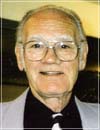
Scott Richardson

For Whom Is This Salvation Meant (Part 2)

1 Timothy 1:15
Scott Richardson August, 4 1996 Audio
0 Comments

Sermon Transcript

Auto-generated transcript • May contain errors

100%
Let me continue where I left
off this morning here. In that first chapter of the
book of 1 Timothy, that 15th verse, faithful saying, worthy
of all acceptation, Christ Jesus came into this world to save
sinners, of whom I am chief. I told you this morning that our name is here, we're
the sinners, and the Savior's name is here, is Christ Jesus. And he's in the business to save.
He was anointed. Christ means anointed. He was fitted. He was set apart,
set aside, commissioned, qualified to be the Savior of sinners. So we have before us our name,
and we have the name of Him who saves, Christ Jesus. Now, Paul here, in making the
statement, this is a faithful saying, worthy of all acceptation. He spoke from his heart, from
deep experience. And he said that it's a faithful
saying worthy of acceptation. And I don't think that you can
find anyone in the whole wide world, living
or dead, whoever responded to the statement that he's worthy, the statement
is worthy of all acceptation, who tried what Paul said, committed
themselves to the Lord Jesus, will find that Paul was untrue
in making that statement. The Savior of sinners, worthy. Is he not able to save? I think
I mentioned this this morning. Is he not just the Savior we
need? He is God and yet man in one
person. He is a man who can sympathize
with us. One of the brethren here the
other day talked about the mediator, the daysman. He talked about
the day's men. He talked about one that stands
between man and God, one that can put his hand upon
man and his hand upon God to reconcile us and bring us together. Well, he's suitable. He fits
our needs. He's a man. He can sympathize with us. He
knows us. And as God, He can save us. A just God and Savior, able to
sympathize because He's a man and is able to save because He's
God. Blessed God-man, Christ Jesus. Now, let me begin by saying that
Christ Jesus came into this world He came into this world, which
means that He existed before He came into this world. He came from heaven into this
world. He existed before He came here
in this world. I think there in John chapter
1, it says that he was in the beginning
with God. Isn't that right? And was not
anything made that was made. So he existed before he came
into this world. You and I began our existence
in this world. That's where we begin our existence.
But He existed from the beginning in the glory of the Father. And
in the fullness of time, in God's time, in due time, He came. He came from heaven into this
world. Christ Jesus came into this world. Now, we have not to look to what
He will do. to save sinners, He's already
done that. It's not what He will do. It's
what He's already done. He's already done the work. He's
already accomplished it. It's finished, the work that
the Father has given Him to do. So many folks have been under
that great delusion that that he is kind of the role model,
which is true, a great example. If we keep following his example,
why, everything will be all right. Well, no, we're not to look what
he is to do in the future, but what he's already done. Now,
when he came and submitted himself and wrought perfect obedience
to God's holy law and lived in this world. And I told you last
Wednesday night that he was despised and rejected and a man of sorrows. And it wasn't just for a month
or two, but he was that from the time he came into the world
until the time he left this world. He was despised and rejected
of men. a man of sorrows acquainted with
grief. And in due time, he gave himself,
his pure, perfect soul, he gave himself as a sacrifice. For I say, he is the burnt offering,
the fire of justice, It fell on him. Oh, listen. He came willingly, which is very
evident from the text. He came willingly. I mean voluntarily. I mean that
he came on his own free will. He's the only one that's got
a free will. He came on his own free will. He came into this world. I say it again, the Savior of
sinners is a thing to be heralded, to be talked
about to others and to ourselves. The salvation. that's wrought
by this man, Christ Jesus, as our covenant head, as our surety,
as our representative. This salvation that he wrought
and the manner that he done it and the willingness on his part
to come voluntarily and give himself in our stead and place
and room should be the leading subject of our meditation and
also our conversation. And it ought to be that which
we desire to tell other people about, what God's done for us
in Christ Jesus. The salvation of sinners is not
a thing to be accomplished in the future, but He has come and
He has been here. He is God Almighty in human form. He came. He's here. And He lived among men. And He came here, and He stayed
here. He didn't come here for one day
and one night. He didn't take a three-day vacation. He came here and stayed thirty-three
years. And the 33 years that he was
here, he came hunting sinners. He came here seeking to save
his lost sheep. That's what he was doing. Seeking
to save his lost sheep. It's the old, old story, Pat. Jesus and his love. That's what
it's all about. The old, old story. God could
not in justice pass over human sin without an atonement. God
couldn't do that. I don't care what this twentieth-century
religious generation says. It's an impossibility for God
to be God and to pass over human sin without an atonement. Can't
do it. No way God will save any sinner
apart from atonement. Sin must be atoned for. Sin must
be paid for. Sin must be covered. Sin must
be put away. And the only way that can be
done is for God to come in human form and do it Himself in the
person of the Lord Jesus Christ. He made the atonement for Himself,
Himself for us. He is our representative, our
Savior. Jesus Christ, who is one with
the Father, came here and gave Himself. Himself. Paul said, He loved us and gave
Himself for us. And that's a fact. That's a fact of God. Now, if
He does not save sinners, And I read to you that this is a
faithful saint, worthy of our utmost consideration and commitment
to it, worthy of it. Paul said it's worthy. If you
try it, you'll find out it's true. It's worthy, he says, it's
a faithful saint, worthy of our all-acceptation that Jesus Christ
came into this world to save sinners of whom I Now, listen
to me, if He does not save sinners, if He does not save sinners,
what? He's a failure. He said He came into this world
to save sinners. Now, if He doesn't save sinners,
He's a failure. Can you believe His coming here
is a failure? I can't imagine. I can't imagine
in the remotest sense that the Son of God is faithful. I believe in my soul that all
He meant to accomplish by His coming here will be accomplished. He will save sinners. He may not save any sinners under
my preaching, but He will save sinners. He must save sinners. He is no failure. I don't believe
that no man shall ever be able to point to the Son of God and
say or find any failure in His work. There's no failure in Him. There's no failure in God's creation. There's no failure in God's providence. There's no failure in the accomplishment
of the purpose of God in Christ Jesus either. And when the whole
story is wrote, or when the whole story is ended, when the whole
kit and caboodle, when the whole shooting match is finalized,
is finished and brought to an end, there will be no failure
in His great work of redemption. Every sinner that he came to
save will be saved by the grace of God through the shedding of
the blood of the Lord Jesus Christ. He came into this world to save
sinners. And Paul said, Of whom I am chief. He identified with sinners. That
great apostle, He placed himself on the ground with you and I. He is the sinner, he said. That
learned man. That man who sat at the feet
of Gamaliel. That man who was a Pharisee and
the son of a Pharisee. That man who said, I kept him
off. That man said, I take my place
at the foot of the cross as a sinner. Many of us, I suppose, would
say, Paul, sin no more grievously than we did before we was converted. We'd say that, wouldn't we? Oh,
listen, Paul said, of whom I am chief. Now, let me talk to you
for just a few minutes here now about the the coming to the Lord
Jesus Christ, what we would call receiving Him, taking Him, appropriating
this sinner's Savior unto ourselves. There's this confession. Paul made the confession. He
said, "...of whom I am came to save sinners, of whom I am chief."
I'm the worst of the lot. I'm the worst sinner that ever
lived, Paul said. I make this confession. I confess
that I'm a sinner. Oh, I confess that I'm a sinner,
Paul said, and I know it. Don't confess that you're a sinner
if you don't know it. But if you know you're a sinner,
confess you're a sinner before God. Paul did. I'm a sinner and I know it. I'm not proud of it. I mourn
over it, don't you? I confess, God, Paul's saying
that I've broken his holy law. I've broken it. I haven't kept
it. And I confess that I believe
he came in this world. He left heaven and he came in
this world willingly. not forcibly, not reluctantly. He came into this world gladly
to save my soul by the shedding of His own blood. And Paul said,
understand that. Understand what He did for me.
I'm a greater sinner than I thought I was. I'm the chief of sinners. that I should need the Son of
God to save me? I'm so far off from God. I'm
so despicable and despisable and contemptible. I'm so corrupt
and polluted. I'm so bad that I cannot be trusted. My heart is desperately wicked
and I don't know it. I'm that bad that it takes It
takes the Son of God. And as I said at the outset,
Almighty God came in human form. Son of God and Son of Man, one
person. It takes Him to save my soul.
I'm the chief of sinners. I'm worse than the chief of sinners.
It takes Him to meet my needs as a sinner. Oh, how terrible! I must be, how horrible I must
be to rebel against such amazing love. God loved me, set his affections
upon me before time ever was. God wrote my name down in the
Lamb's Book of Life. Paul, God told Paul, he said,
he said, Paul, he said, Paul was talking about them Corinthians
going over there to Corinth, and his little hesitant, reluctant. God told Paul, he said, Paul,
fear not. He said, I have much people in
that city. I have much people in that city.
There's people in that city whose names were written down in the
Lamb's Book of Life. I have some over there. Oh, it
takes a Savior. What a wonderful Savior. Love
us. Write our names down in the Lamb's
Book of Life. Leave the glories of heaven and
come down here and be spit on, to be despised. and rejected,
cast out, as the off-skying of the earth, to pay our debt, to
set us free. Listen to me. He that has a great
Savior will feel himself to be a great sinner. If you have a
great Savior, you'll feel yourself to be a great sinner. Be like
old Paul. I'm chief, he said. I came down
to save sinners of whom I'm chief." Well, now, Paul said this after
he was saved. Chief of sinners after he was
saved? Well, he'd already experienced
what God had done for him in Christ on the road to Damascus
when God unhorsed him, put him in the dust, the scale of blindness
on his eyes. Now he says, after he's saved
and sanctified, making progress, a great preacher, an apostle,
he said, after I've been converted, after I've been saved by the
grace of God, I am still the chief of sinners. That's what
he said. Chief of sinners. This fellow,
by his own testimony, said he was not a whip behind the chiefest
of the apostles, and yet he says he's the chief of sinners after
he's saved. I say, if you've got a great
Savior, you're a great sinner. The bigger God, you have the
bigger sinner you're going to be. That's the reason why, Bob,
people, talk to religious people during the day, they don't know
anything about what you're talking about. I told a fellow one time,
I said, well, it depends on how big your God is. He said, do
you think I can do this? I said, it depends on how big
your God is. You got a big God, you got a little God. You got
a God that you have to pull the strings and let Him do things. I said, you don't let God do
anything. God does what He wants to. You're
a big God, you're a big sinner. Huh? Oh, listen, after he's saved,
after being forgiven, after being justified, after being clothed
in the righteousness of God by imputation, after having all
of his sins forgiven, after being able to say, I know whom I have
believed and I'm persuaded that he's able to keep that which
I've committed unto him against that day, still, able to say,
I'm still the chiefest of sinners. I am too, and so are you. Ah,
where'd they get this business of you're going to be absolutely
immaculately holy someday? Not in this body of flesh. If
Paul never experienced that, neither will we. We're still
sinners, even in our very best state. We're still sinners. He takes his place among sinners. I'm a sinner. Oh, listen to me. Some people think that there's
nothing in faith. Faith, believe in God. Abraham
believed God. That's what faith is, believe
God. This is a faithful saying, worthy of all acceptation. Christ
Jesus came into this world to save sinners. I'm a sinner. That's
what Paul said. I'm a sinner. I'm a sinner. I'm the chief of sinners. I excelled far beyond, my brethren, in holiness, righteousness, good
deeds and all that. But he said, I'm a sinner. I'm
a sinner. I lay hold of Him. I trust Him. I trust the man,
Christ Jesus. Without faith, someone said,
well, faith, make too much of faith. But listen, faith's trusting
God. Faith's believing in His Son.
And without faith, it's impossible to please God. Isn't it? Without
faith. Faith is confessing who I am. Confessing who He is. Appropriating
Him. Receiving Him. Taking Him. He's
mine. That's what true faith is. Without
that, without that, you can't please God. God helped you and
me to believe. I'd like to use this word, but
I will. Quit your doing. Quit your doing. Seize your doing. This is a word
I don't like to use, but I will. Seize your doing. Let God save
you. That is His business, not yours. He came into this world to save
sinners. That's His business. Seize your doing. Let Him save
you. It's His business, not your business. It's His business to save. Let
Him save you. Then, I think old Paul, after
he said this, I think he put down his pen. I think that he was so overcome with what
God had done for him through Christ, so overcome that he couldn't
help this outburst of worship, this outburst of praise. And he lifted up his voice with
thanksgiving, and he said in verse 17, Now unto the King Eternal."
This worshipper here, I mean, he couldn't help himself. After
he got into this down here, about him being a sinner, the chief
of sinners, about the Son of God leaving glory, leaving heaven
to come down here to save him, he said, unto the King Eternal,
the Lord Jesus, the King Eternal. Not temporary. The scene where
the Queen of England was 91 years old, isn't she? That was her
birthday coming up. The Mother Queen. The Mother
Queen. The real Queen. Ninety-one years
old. She's just temporary, Bill. She's
going to pass on. There's nothing eternal about
her that isn't in mortal flesh. Paul said, But now unto the King
Eternal, always was and always will be the King eternal, immortal,
invisible, the only wise God, be honor and glory forever and
ever. Amen. That's where Paul closed
this letter. He couldn't help himself. And he said, I charge you, Timothy, son Timothy, that you'd continue this work.
Thou mightest war a good warfare. Preach the gospel. This stand
will be his.
Scott Richardson
About Scott Richardson
Scott Richardson (1923-2010) served as pastor of Katy Baptist Church in Fairmont, West Virginia.
Broadcaster:

Comments

0 / 2000 characters
Comments are moderated before appearing.

Be the first to comment!

Joshua

Joshua

Shall we play a game? Ask me about articles, sermons, or theology from our library. I can also help you navigate the site.