Bootstrap
Carroll Poole

Christ Our Boaz

Ruth 4:1-10
Carroll Poole January, 13 2013 Audio
0 Comments
Carroll Poole
Carroll Poole January, 13 2013

Sermon Transcript

Auto-generated transcript • May contain errors

100%
The book of Ruth chapter four,
the title of our message today is Christ. Our Boaz Christ, our
Boaz. And before we read the text for
those who are not familiar with the story of Ruth, we'll go back
to chapter one, to the beginning of the story and look at, look
at some things leading up to chapter four. The story begins
with a time of famine. Well, before the famine even,
chapter 1 and verse 1, the words we often find in scripture, and
it came to pass. I comment on that sometimes.
It does not say it just so happened. It does not say as luck would
have it. It says, and it came to pass.
What does that mean? Well, it came to pass because
it was ordained to come to pass. God has arranged and controlled
all history, not just from day one, but long before day one,
from eternity, and he is working things according to the counsel
of his own will. And so that's what it means when
we read, and it came to pass. It was bound to come to pass.
It was certain to come to pass. God brought it to come to pass.
It came to pass. The setting of this, a time of
famine in Bethlehem, Judah, or Bethlehem of Judea. We read here that a certain man
named Elimelech, and I've told you many times to take notice
of that word certain in the scriptures. Our God deals in certainties,
not possibilities, not accidents, not coincidences, but certainties. Everything he does is certain
without question. without error, without regret. He is certain of everything he
does, and he very certainly does it. So this certain man named
Elimelech, in time of famine, he packed up his family and went
to sojourn, meaning to travel around in the country of Moab. Now I've heard Armenians rant
and rave for 40 years about how out of the will of God this man
was. But I want to say he did exactly what God moved him to
do. He did exactly what, as a husband and father, he thought best to
do in order to provide for his family. If people would just
listen to the wisdom of Joseph speaking to his brethren down
in Egypt, He told them, it wasn't you that sent me down here, it
was God. And so is the case here. Elimelech
never made this move on his own. It was not, as men say, by his
own free will that he did this. Now it's true, no human compelled
him to do it or forced him to leave Bethlehem and go to Moab,
but God controlled his mind and heart, just as he does the mind
and heart of every man, and called Elimelech to conclude that this
is the best thing he could do to provide for his family. So
he and his wife Naomi and their two sons, Melon and Kilion, went
down to Moab. The two sons married Moabite
women. The one's name was Orpah and
the other Ruth. And over the course of 10 years
time, Elimelech died and his two sons died. All that's left
of this family is three widows, no husbands. Of course, in that
is a picture of the human family. In Adam, all die. in Alimelech
all die, and leaving nothing but the widows. So Naomi has
no future. She has no hope in herself. She
has two widowed daughters-in-law. They're Moabites. Her family
is gone. But in the providence of God,
in chapter 1 and verse 6, Naomi got a report that the famine was over in Bethlehem,
Judah. And it began to swell up in her
heart to go home. Now again, nobody told her she
had to go home. Even God never commanded her
to go home, but he put it in her heart to go. And when God
does that, you're going. See? You'll want to go. And if people would only look
at God's business and God's word and God himself in that way.
This morning, if you have a desire for the Lord, that's of him. If you have no desire for him,
no longing for his presence and power and manifestation in your
life, then he has left you to that. You say that's cold. No, that's true. Your nature
wants it that way for God to just leave you alone. You need no help running away
from God. You'll do that. What you need
help in is coming to Him, running to Him, seeking after Him, longing
for Him. For you to have that, it takes
His power, it takes His initiative, it takes His working. So Naomi
packs up to head home back to Bethlehem, Judah. And Orpah and
Ruth, her daughter's-in-law, are going with her. They had
already said they would leave their native Moab. They would
leave their relatives, all that ever known and loved. And they would go to a strange
land with a strange people. Follow Naomi. But there's a difference
between these two daughters-in-law, Orpah and Rue. With Orpah, her commitment to
go was only a measure of human love, sentiment, because when
Naomi got serious that it would be best for them to stay behind
in Moab, Orpah was convinced and stayed behind in Moab. and
she's never heard of again. But something else was in Ruth's
heart. God had done a sovereign work
in her heart. And in spite of Naomi's advice
and even pleading with Ruth to stay behind in Moab, it was in
Ruth's heart to go with Naomi, stay with Naomi, die with Naomi,
Nothing else would do. She said, your God is my God.
Where you die, I'll die. Where you lodge, I'll lodge.
All of that. Orpah never said that. Ruth did.
So chapter one ends with Naomi and Ruth arriving at Bethlehem. And once again, in God's perfect
timing and all wise providence, I tell you, it's wonderful to
read this book and observe God's timing, God's providence in all
things. And again, we see it in that
when they arrived, the very last line of the last verse in chapter
one says, it was the beginning of barley harvest. It wasn't a time when there were
no crops to reap. It wasn't a time when they would
starve to death. But it was in the beginning of barley harvest. But it wouldn't be easy. They
would have to live. They would have to do something
to survive. So Ruth goes out to glean behind
the reapers who worked for the farmers. It was the law in Israel,
and you can find this in the Old Testament. by which poor
people could survive. They could come along behind
the reapers and they could harvest anything that was left. Anything
the reapers missed was for the gleaners. The reapers could not
go back and get it. It was a one-time deal. Anything the reapers accidentally
dropped They were not to pick it up. It was left for the poor
to glean. In that law also, recorded in
Leviticus 19, they were to not to reap the corners of the field. Farmers were to leave the corners
for the poor to come and glean. Now, I'm not preaching on giving,
even though we talked about that our new offering envelopes this
morning, but I got to throw this in. Scripture does not tell us
how big the corners of the field are. Obviously, the larger the field,
the larger area you would consider to be the corner of the field.
But it was not a definite measure. They were simply to leave the
corner, corners of the field, for the poor to glean. If a greedy
man had a very, very large field, it was his privilege to leave
only a tiny area. We'll say just a little, maybe
six-foot triangle in the corner of the field and call that the
corners of the field. It was legal. It was legal. Another man may have a field
not half that size, and his generosity causes him
to consider the corners of the field ten times the size the
other guy did. You see? This is really the New
Testament order of giving. 2 Corinthians 9, 7. Every man according as he purposeth
in his heart, so let him give. You don't find anything in the
New Testament about 10%. What you find in the New Testament
is every man according as he purposeth in his heart, so let
him give, not grudgingly or of necessity, not a legality, for
God loveth a cheerful giver. Now, I just conclude that thought
today by saying you determine how large the corners of your
field are. You're saying, well, I don't
have much. You're just saying you have a small field. And that's
all right. Nothing wrong with having a small
field. But you determine the size of the corners of the field.
Since it's God that gives the increase in the entire field. And since God loveth a cheerful
giver, don't you think it would be wise to mark the corners as
large as you can and be as consistent in giving as you can? Let me
just say this and I'll move on. I've got to move on. Y'all wanting
me to move on. Through the years, I couldn't begin to count the
people both drifters and local people who call me on the phone
or stop by here needing financial help. And guess what? They always claim to be believers. I've never had one stop and say,
I'm an infidel, I don't believe in God, Don't want nothing to
do with it, don't want to hear about it, but could y'all help
me finance?" Never had that happen. No. They got more sense than
that. But I've never had one tell me,
I attend such and such church,
I attend on a regular basis, I give consistently of my financial
means in support of my church. Never once has that happened. What am I saying? I'm saying
be careful how you mark the corners of your field, year after year
after year, and watch God honor those who honor Him. It happens. Well, Ruth goes out gleaming.
In chapter 2 and verse 3, here it says that it was her hap, her hap, That's the only time
you're going to find that word. And some would say it's her good
luck or her good fortune, but it's not that at all. It is by
the overseeing and overruling hand of Providence, Almighty
God, Ruth gleaned in the field of a man named Boaz. And immediately upon seeing Ruth,
Boaz fell for her. It was love at first sight. And reading the story, he made
sure that she never went to glean anywhere else. He instructed
his reapers, his employees, to be kind to her. None of you filthy men are to
touch her. And she's to eat with us at lunchtime. And she's to
drink our water. And then he told them, I want
you to let fall some handfuls of purpose for her to glean. Chapter 2, verse 16. Now, many
have said handfuls on purpose. It was that. It was on purpose.
It was deliberate. But the scripture says handfuls
of purpose. Boaz is saying, I have a purpose. And you reapers deliberately
make sure that she fares very well. It's part of my purpose. And it's working toward the fulfilling
of my purpose. Well, it is this man, Boaz, who
pictures Christ, our Redeemer. And that's why we titled the
message Christ Our Boaz. Ruth pictures the fallen sinner,
Gentile with no help, no hope. As Paul said in Ephesians, she's
an alien from the commonwealth of Israel, a stranger from the
covenants of promise, having no hope. and without God in the
world. Well, Boaz exercised his authority
and his ability to woo and to win Ruth's heart. And that's
the only way any sinner has ever come to Christ. John 6.44 says,
Our Lord said, No man can come to me, except the Father which
hath sent me, draw him." So Boaz is going to redeem. There were
three things required to be a redeemer of a family or of a property
in Israel. Number one, a man must be a kinsman. He must be a relative to have
the right to redeem. Secondly, a man must be able
to afford it. He must have the financial means,
the resources to redeem. And thirdly, a man must be willing. It must be in his heart to redeem.
He must want to do it. So first we'll consider Boaz's
right to redeem. In reading the story, we find
that there was a nearer kinsman to Naomi than Boaz. And that kinsman had first option. So Boaz sets out to deal with
the legality of the matter. And this is what we find in chapter
4, where I ask you to turn. And so we'll read a few verses
here, beginning in Ruth chapter 4 and verse 1. Then went Boaz
up to the gate and sat him down there, and behold, The kinsman
of whom Boaz spake came by, unto whom he said, Ho, such a one,
turn aside, sit down here. And he turned aside and sat down. And he took ten men of the elders
of the city and said, Sit ye down here. And they sat down.
And he said unto the kinsman, Naomi, that is come again out
of the country of Moab, selleth a parcel of land. which was our
brother Elimelech. And I thought to advertise thee
saying, buy it before the inhabitants and before the elders of my people.
If thou wilt redeem it, redeem it. You have the first right. If you're going to do it, do
it. Get on with it. But if thou wilt not redeem it, then tell
me that I may know. For there is none to redeem it
beside thee, and I am after thee. And he said, I will redeem it.
The man said, all right, I'll do it. Verse five, then said,
Boaz, what day thou buys the field of the hand of Naomi? Thou
must buy it also of Ruth the Moabitess, the wife of the dead,
to raise up the name of the dead upon his inheritance. And the
kinsman said, I cannot redeem it for myself. lest I mar my
own inheritance. I ain't getting tangled up with
no Moabite woman. I can't do it. Lest I mar my own inheritance.
I don't want that reputation. And so he says to Boaz, redeem
thou my right to thyself, for I cannot redeem it. Now this
was the manner in former time in Israel concerning redeeming.
concerning changing, for to confirm all things a man plucked off
his shoe and gave it to his neighbor, and this was a testimony in Israel.
Therefore the kinsman said unto Boaz, Buy it for thee. So he
drew off his shoe. He was forfeiting his right.
And Boaz said unto the elders and unto all the people, Your
witness is this day that I have bought all that was a limulex,
and all that was chileans and melons, of the hand of Naomi. Moreover, Ruth the Moabitess,
the wife of Malon, have I purchased to be my wife, to raise up the
name of the dead upon his inheritance, that the name of the dead be
not cut off from among his brethren, and from the gate of his place
ye are witnesses this day." So the legal part is settled. He dealt with it legally. Now
Christ our Lord, in order to be our Redeemer, the Son of God
must be our kinsman. He must lay aside his glory,
come down from heaven, be born in a body of flesh like unto
our sinful flesh, and yet he's without sin. He was made to hunger
and thirst and feel sorrow and suffer in his flesh as we do. He felt all the pains and the
problems of a sinner, though he was not a sinner. He was made
our kinsman in the flesh. He was, as Hebrews says, he's
touched with the feelings of our infirmities. In all points,
tempted like as we are, yet without sin. So he's our kinsman in the
flesh. He has a legal right to redeem. The very business Boaz took care
of at the gate, legally, our Lord qualified for by coming
in a body of flesh, like unto our sinful flesh, yet without
sin. Now, not only the right, but
secondly, Boaz's resources to redeem. In Israel we said a man
must be not only a kinsman to have the right of redemption,
he must have the resources, he must be financially able to do
it. Chapter 2 and verse 1 introduces
Boaz as a mighty man of wealth. He can well afford to do what
he wants to do. Our Lord was born and lived,
as we know, in poverty monetarily. But yet, like Boaz, he's a mighty
man of wealth. You see, the wealth required
to redeem us was not dollars and cents. The wealth required
for our redemption was not that Christ should come with millions
of dollars, no. But the wealth of our Redeemer
is a perfect righteousness. The blood of fallen Adam did
not run through his veins as it does ours. He had no sin nature as we do. He never sinned while he walked
this earth. He faced all the rejection and
the ridicule, the false accusation, the hatred, condemnation of men, and crucifixion
of his body. He never sinned once. Oh, what
a mighty man of wealth our Redeemer is, a wealth of righteousness. And when he died, and when he,
as our great high priest, went to approach an infinitely holy
God in our life, he never took with him millions of dollars. He never took with him our reputation,
and our professions, and our performances. No, he took his
own wealth. What was it? precious blood. He possessed and he gave the
resources required for our redemption. Oh, yes, he had the resources
to redeem. And thirdly, not only the right
to redeem and the resources to redeem, but one must have a reason
to redeem. He must want to do it. And Boaz's
reason was the love which sprang from his own heart. He just fell
for Ruth. It had nothing to do with Ruth's
right. She had no free will in the matter
of marrying such a man as this. She couldn't make it happen. She never dreamed it could happen.
It was all him. This is grace now. It had nothing to do with Ruth's
resources. She had none. She's a poor gleaner. It's not anything that she had
that could be of any benefit to Boaz. It was just her. It was just her that he wanted. But whereas love never sprang
from her right, but He is. It never sprang from her resources,
but He is. Love and love alone was the reason. I hear people say, supposed to
be intelligent people say, oh, I don't know what God saw in
me. Well, I can tell you, He never saw nothing. Nothing worth
a flip. It wasn't your right. It wasn't
your resources. But he had one reason and one
reason only. It was his love. It was his love. He set his love on us. Not that
we're lovely and most of the time not even lovable. But his love is the reason. Galatians 2 20 Paul said he loved
me and gave himself for me Let me give you one of the thought
would be finished The result of Christ's redemption Christ
our Boaz Talked about his right to it
and his resources in it and his reason for it Now the result
of it This is how we identify in ourselves, identify
ourself as God's child. When Boaz conquered her heart and he and Ruth are married,
chapter 4 and verse 13 says, the Lord gave her conception. and she bear a son. Verse 17, they call his name
Obed. The name Obed means worship. Worship. When a mighty man of wealth like
Boaz redeems marries, loves a poor Moabite
sinner like Ruth. That love relationship, when
they come together, produces or results in a new life named
worship, Obed. When the Lord Jesus, the mighty
man of wealth, The one and only that could, was able, and would
do anything for me. When He redeemed me, the result
was and still is worship. I want to worship Him. Religious entertainment is not
my game. I want to worship. my precious
Redeemer. The last five verses of this
blessed little book, Ruth chapter four, verses 18 through 22. It's a matter of history and
it ties this back to the seed of Abraham, Isaac and Jacob. It ties it to the tribe of Judah.
This is the only connection we have. in this period of history. Verse 18, now these are the generations
of Perez. If you go back to Genesis, you'll
learn that Perez was the oldest twin in that story of Judah and
his daughter-in-law disguising herself as a harlot and conceiving
by Judah. Perez was of the tribe of Judah. Now that's a wild story. It's in Genesis 38, by the way,
if you want to go read it. I want to say to you the story
of redemption. The lineage of our Lord Jesus
Christ is not all nicey nice stuff. It is not free from sexual
scandal and shame and disgrace along the way. But I'll tell
you this. It's all working according to God's sovereign design to
bring His Son into the world. Verses 18 through 20 here, now
these are the generations of Perez. Perez begat Hezron. Hezron begat Ram, and Ram begat
Amenadab, and Amenadab begat Nashon, and Nashon begat Salmon. Now this man Salmon He was a
great man in Israel who married Rahab the harlot. You remember
her in Jericho. I'll tell you, really, there's
just too much shameful stuff in the story of redemption to
suit most people. There's some bad stuff in there. They don't see that Christ never
came for good people. He came for sinners. He came
through sinners, but he was not one. How do you figure that? Bad, some bad, bad dudes back
through there, as Bill would say. But let me just remind you of
something. God really scraped the bottom of the barrel when
he got to me. He dug a hole in the bottom of
the barrel when he got to some of you. And Salmon begat Boaz, and Boaz
begat Obed. Boaz and Ruth have this baby
boy named Obed. And Obed begat Jesse, and Jesse
begat David. These last five verses, they
began by tying Boaz back, back to the tribe of Judah. And then
they conclude here in verse 22, tying them to the house of David. Oh, precious Redeemer, Christ
our Boaz. We sometimes sing, redeemed,
how I love to proclaim it. Redeemed by the blood of the
Lamb, redeemed by His infinite mercy, His child and forever
I am. That's our song, the song of
redemption. We don't come in here talking
about how nice we were last week and how much good we did and
how well we behaved. Surely God ought to bless us
because we hadn't got mad and cussed anybody out last. No,
we don't talk about all that garbage. You hadn't been good
enough to speak of. Count on it. Redemption is our
song. Redeemed by His infinite mercy,
His child and forever I am. So I encourage you to take time
to read and meditate on these brief chapters. Four chapters.
It won't take you just a few minutes. Little Book of Ruth.
And I promise you, as you meditate on these thoughts, at least this
is the way it happens with me. This is the way it happens with
God's children. If you'll read and meditate on this, here's
what'll happen. The Lord will make it bigger and bigger and
bigger. And there'll be a verse you can't
get away from. There'll be a line you can't get away from. Sometimes
there'll be a word you can't get away from. And God will just
make it bigger and bigger and it'll swell up and you'll almost
explode. looking at our precious Redeemer,
Christ, our Boaz. That's who he is. Let's stand together.
Carroll Poole
About Carroll Poole
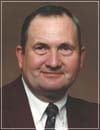
Carroll Poole is Pastor of East Hendersonville Baptist Church, Hendersonville, NC. He may be reached via email at carrollpoole@bellsouth.net.
Broadcaster:

Comments

0 / 2000 characters
Comments are moderated before appearing.

Be the first to comment!

Joshua

Joshua

Shall we play a game? Ask me about articles, sermons, or theology from our library. I can also help you navigate the site.