Bootstrap
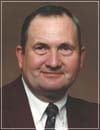
Carroll Poole

Vessels Of Mercy

Romans 9:22-23
Carroll Poole September, 9 2012 Audio
0 Comments
Carroll Poole
Carroll Poole September, 9 2012

Sermon Transcript

Auto-generated transcript • May contain errors

100%
about verse 11 here in Romans
chapter 9. For the children being not yet
born, and the children being referred to is Esau and Jacob,
yet in Rebekah's womb. But God says the children being
not yet born, neither having done any good or evil, It has not yet been determined
which one's a good little boy and which one's a mean little
boy. Not yet born, having done neither
good nor evil, that the purpose of God according to election
might stand, not of works, but of him that calleth. It was said
unto her, that is, unto Rebekah, the elder shall serve the younger. As it is written, Jacob have
I loved, but Esau have I hated. This is God talking. Paul says,
what shall we say then? Is there unrighteousness with
God? God forbid. For he saith to Moses, I will
have mercy on whom I will have mercy. And I will have compassion
on whom I will have compassion. So then it is not of him that
willeth, nor of him that runneth, but of God that showeth mercy. For the scripture saith unto
Pharaoh, even for this same purpose have I raised thee up, that I
might show my power in thee, and that my name might be declared
throughout all the earth. In other words, God raised Pharaoh
up to do just what he did. Therefore hath he mercy on whom
he will have mercy, and whom he will he hardeneth. Thou wilt
say then unto me, why doth he yet find fault? For who hath
resisted his will? Nay, but, O man, who art thou
that replyest against God? Shall the thing formed say to
him that formed it, why hast thou made me thus? Hath not the
potter power over the clay of the same lump to make one vessel
unto honor and another unto dishonor? Not of a different lump, but
of the same lump. Hath not the potter power over
the clay to make one vessel unto honor and another unto dishonor?
To make one person respectable and decent and honest and to
make another one low down and sorry and mean as a snake. You
say, well God don't do that, the devil does that, sin does
that. Yeah, but the teaching here is that apart from God's
intervention we'd all be like that. You see, what if God willing
to show his wrath and to make his power known endured with
much long-suffering the vessels of wrath fitted to destruction,
and that he might make known the riches of his glory on the
vessels of mercy, which he had aforeprepared unto glory. Even us whom he hath called,
not of the Jews only, but also of the Gentiles, As he saith
also in Osea, which is Hosea, I will call them my people which
were not my people, and her beloved which was not beloved. And it
shall come to pass that in the place where it was said unto
them, ye are not my people, there shall they be called the children
of the living God. That's reading down through verse
26 in Romans Chapter 9. Popular religion is popular because
it makes much of men and little of God. A godly religion has never been
popular and a popular religion has never been godly. Men say the opposite of what
God says. You say, well, I've never heard
this kind of talk. Well, just hold on a few minutes and listen,
and we're going to tell you what the book says here in Romans
chapter 9. This is not my idea, not anybody else's idea in this
world. It's God's thinking. It's God's Word. Men say the
opposite of what God says. They say you're something special.
And God is nothing without you. But God's the one that's special.
And we're nothing without Him. Now in verses 22 and 23, in verse
22, we read of a group of people called the vessels of wrath. This is God's wrath it's talking
about. I know men do not seriously think
of this nowadays and do not even believe this in our generation,
but I want to say I truly thank God this morning that I'm not
in that number called the vessels of God's wrath. Oh no. And the only reason I'm not is
not in me or because of me. The only reason I'm not is because
in the next verse, verse 23, we read of a group of people
called the vessels of mercy. I thank God I'm one of those. And this title, vessels of mercy,
it emphasizes that it's God's mercy. which makes the difference. It's
not vessels of merit like we did anything to obtain God's
favor. Not at all. It's not that we
made all the right choices in life and never made any serious
mistakes in life. That's not it. We were as guilty and as deserving
of God's wrath as any person in hell this morning. We are as undeserving of God's
mercy as we can possibly be. Verse 16 actually said it clearly. So then it, talking about salvation,
God's mercy, forgiveness, so then it is not of him that willeth
so much for free will. nor of him that runneth." So
much for religious works. Then what is it? But of God that
showeth mercy. I want to say this, and we know
this, but we need reminding. We need reminding of things.
Do you ever think about how easy it is to forget good things and
remember bad things? That's part of our depravity,
fallen nature, to forget and confuse what's right and what's
important and what we ought to remember and what ought to be
fresh in our minds we let go of. But some old garbage or some
little silly something that don't amount to anything with no profit
whatsoever You think about it from now on. That's sad. So we need reminding of these
things. And here's what I want to say. Here's what I want to
remind us of. There are only two classifications. And we read them in these two
verses. Vessels of wrath and vessels of mercy. That takes
in all Adam's race. in every generation. There is
no third, fourth, fifth, or 100th class. Two classifications. Now humanistic
thought, religious thought, is that God could be slightly angry
with you, but you're not really, he's not really bad angry with
you. Or he could be slightly impressed with you, but not really
enough. You hadn't done quite enough.
All that's wrong. All that's wrong. There are two
vessels of wrath, vessels of mercy. And I must say this bluntly,
clearly, and emphatically. God either loves you with a perfect
love or he hates you with a perfect hatred. When I say perfect hatred,
I mean he has a right to. I mean he is right to. His love for the vessels of mercy
is not in the vessels of mercy. It's in his son. And in his son, he loves the
vessels of mercy as much as he can possibly love them. He loves his own as he loves
his Son in his Son. The vessels of wrath he cannot
hate any more than he does. It's either full and final and
forever acceptance with God in Christ, that's the vessels of
mercy, or it's to be judged in Adam in our sins, rejected of
God, that's the execution of God's justice, and that constitutes
the vessels of wrath. There is no middle ground. And
the distinction was made not by Uriah, but in eternity past. God decreed to create the human
race that would reject his commandments, rebel against his authority,
leaving the entire race alienated from God with no desire not to
be alienated. But before the creation, knowing
exactly what this human race would do, God also decreed that
in himself, by himself, for himself in his glory, he would redeem
a chosen number of that fallen race. Not one nationality, not
one country, not one city, not the good-looking, not the
rich, Not the famous, no, but a certain number known only to
him from every kindred, nation, and tongue. Paul says this in
Ephesians 1 and 4 there that the vessels of mercy are so because
we were chosen in Christ before the foundation of the world. I told you this wasn't a popular
chapter. And what's wrong with it in most people's minds is
that it puts God in charge and not you. See? Paul said it like this in 2 Thessalonians
2.13, God hath from the beginning chosen you to salvation through
sanctification of the Spirit and belief of the truth. He's
talking to believers. Whereunto he called you by our
gospel, and of course by our gospel, Paul meant by the gospel
we preach, the gospel of Jesus Christ. He called you by our
gospel to the obtaining of the glory of our Lord Jesus Christ. This was decreed, this was determined
by God himself before he created the world. This is such a glorious truth.
that we're vessels of mercy. Now, a lot of people have been
here. A lot of people have been in this church through the years
that are not here this morning. Some of them are already in eternity.
And where others are, I don't know. But I want to say this. I surely hope that their problem
was with me or with you and not with God. I fear some have fallen out with
the message, believing that we have a say
in things, believing that we have a say in whether God loves
us. In other words, believing I can
change his mind about me. That's all wrong. All God's love is in Christ. If he loves us at all, it's for
Christ's sake. These vessels of mercy chosen
in Christ from eternity are who Christ came into the world and
died to save. They are who He prayed for before
He died. Remember that great chapter,
John 17. He prayed the night before the crucifixion. He's
praying to the Father and He said that He should give eternal
life to as many as thou hast given Me. He said in that same prayer,
John 17, verse 9, I pray not for the world, but for them which thou hast
given me." You see, Christ was not here in this world to try
and rescue any, not given him from eternity. He was here to lay down his life,
shed his blood, and die for his own. He didn't come here to get
him a people, he came here for his people. You remember the great announcement
to Joseph from the angel of the Lord before Christ was even born,
Matthew 121, the angel said to Joseph, Thou shalt call his name
Jesus, for he shall save his people. from their sins. Not anybody else. He's come to
save His people from their sins. All right? Two or three questions
about this. Number one, does this mean that
God's mercy is limited to the vessels of mercy? Savingly, yes. Eternally, yes. We just said
that. But there are many all-inclusive
and general mercies of God in time upon the natural creation
and upon all men. And this is part of the mystery
of God. You see, if he were only good
to his children, everybody would want to be his child. If the decaying and damning effects
of sin were let loose on this world with no restraint and no
temporal mercies, all men would cry to God for mercy. But God has restrained the effects
and the wages of sin from collecting too swiftly. And he's let even
the ungodly have it good in this life, especially in this country. It's to prove that by so-called
free will, no man chooses Christ. The better men have it, the less
use they have for God. So yes, God's mercy does extend. to all humanity in a temporal
sense. Matter of fact, every moment
of every day that judgment is withheld from this world is due
to nothing but the mercy and the long-suffering of God. You remember after the flood,
Genesis 8, 22, God promised, while the earth remaineth. As long as she stands, while the earth remaineth. You see, we need to understand
that God's mercy is big enough to let even vessels of His wrath,
who are going to perish in their sins, God's mercy is big enough
even to let them enjoy His mercies in this life. And He's been doing
it for 6,000 years. That's mercy. While the earth
remaineth, there will be seed time and harvest. This goes for the vessels of
mercy and the vessels of wrath. God promised that while the earth
remaineth, there will be seed time and harvest. Every spring,
it may not be what you want it to be. It may be too wet. It may be too dry. But God has
promised there will be time to get some seed in the ground and
a growing season. He promised seed time and harvest. That harvest may not be what
you want it to be. It may not have been what you'd hoped it
would be, but he promised as long as this world stands, there
will be seed time and harvest. That's God's mercy. That's God's
mercy. Cold and heat. Summer and winter. Of course, we can argue on who
likes what best. You know, I'm sure glad it's
not up to us. But he said, cold and heat, summer
and winter, day and night shall not cease. That's the mercy of
God. That some people don't burn us
up with heat, and others would freeze us to death with cold.
God knows just how to do it. Oh my, the older you get, the
more you like summer for most of us. What about the sunshine and the
rain? Matthew 5, verse 44, God maketh the sun to rise on the
evil and the good, and sendeth rain on the just and the unjust. That's mercy. That's mercy. That fellow across the way, that
will shake his fist in God's face and curse God! His corn
will grow too. Probably better than yours. That's
God's mercy. In Luke 13, our Lord tells a
story about a tower in Siloam that fell. And 18 people were
killed. And Jesus asked the question,
He said, do you think those 18 were greater sinners than the
rest of you? Do you think that's why that
happened to them? He said, no, they weren't. We're all guilty sinners. And
every escape from destruction is a mercy of God. Because Christ was made flesh,
He walked this earth as one of us. He benefited from the creation,
the plant life, the animal life. And because of God's Son, for
His sake, there are some general mercies promised and enjoyed
by all humanity. Whether men know it, believe
it, or appreciate it, God is faithful. and extends mercy to
all. Psalm 145 9 said the Lord is
good to all. This is nothing like the particular
mercies belonging to God's elect to those he titles in verse 23
vessels of mercy. Another question who are the
vessels who are these vessels of mercy? How are they determined
and declared such? Well, verse 24 tells us, even us, believers, whom he hath
called, not of the Jews only, but also of the Gentiles. God's call is the difference. That's the difference. Verse
15, For he saith unto Moses, I will have mercy on whom I will
have mercy, and I will have compassion on whom I will have compassion. All these preachers want to talk
to you about exercising your free will. You've been doing
that. You've been doing that from day one. It is only as God in His grace
Tenders and melts and breaks a heart and convicts of sin and
points you to Christ That's the only times ever in change If
all you got to work with is your free will hell is your lot, I'll
tell you that Salvation is of God's initiative and God's mercy I Will have mercy on whom I will
have mercy He says, because I will. That's all the reason there is.
And when you go to looking for any other reason, you're messing
up, you're in error. There is absolutely no way to
get a handle, to get an understanding on God's saving mercy. Accept
it be as He wills to dispense it. That's all there is to it. If you deserve it, it's not mercy. It's justice. If you earn it, it's not mercy. It's wages. If you buy it, it's not mercy. You paid for it. Mercy can only be bestowed on
those who deserve wrath. You'll never have his mercy but
one way. If he wills it, if he wills it,
you see, if we believe this book, we wouldn't be so proud and boastful. thinking about praise, God I've
got it made, I'm on my way and I will not turn back. Is that
so? If God left you to yourself you'd turn back a thousand times
before dark. See this is God's business. It's
not in your nature to go after Him. He had to come after you. The great depravity of the sinful
heart in all of us assumes that since man's conduct got us in
trouble, that's what Adam did, we assume then that man's conduct
can get us out of trouble. Not the case. Christ gets us
out of trouble. You can't be good enough to obtain
God's mercy. And you can't be bad enough to
extinguish his mercy. He's God. He does everything
he does for no other reason than just because he wants to. That's
what this chapter says. That's why it will not be read
too many places today. But you go home and read it. You won't talk him into anything.
You won't talk him out of anything. He's God. God is really setting
his ways. There's no change in him. Not
at all. His vessels of mercy are sold
by his choice. Paul asked the question, 1 Corinthians
4, 7, Who maketh thee to differ from another? God does. God does. And if he didn't, you'd
be as sorry as they come. So would I. You remember when God was pouring
out the plagues on Egypt back in the book of Exodus? He said this to Moses. He said, I'm doing it this way
that you may know how that the Lord doth put a difference. between the Egyptians and Israel. What difference is there this
morning between us and a God-hating world? It's the difference the Lord
hath put. It's not any difference you've put or I've put. Some people go to church all
their life walk down the aisle enough times
to wear out the carpet all by themselves. Howling preachers saying now
if you've sinned you need to come so we can brag about how
many they get to come. They come down, apologize to
God, go right on back about their business. Some have bounced around shook
the hand of every preacher in this country and still mean as hell. I run
into them on the street and they say, I'm looking for a good church.
They're lying through their teeth. They ain't looking for nothing
but somewhere to raise hells more. Old Dr. B.B. Caldwell used to
say, some have been baptized so many times the tadpoles know
their social security number. Got a string of Sunday school
pens that reached plum down to their navel. But apart from God's mercy, the
best you can do is die and go to hell. That's the best you
can do. Well, our time's about gone,
but let's see. Whatever. One more question, maybe. What
are the specific mercies belonging to God's vessels of mercy. Three things. There's the mercies
of Christ's preparatory work. The last statement of verse 23
says concerning these vessels of mercy, it says, which he had
afore prepared unto glory. God did what needed to be done
for us to be vessels of mercy. It involved not only the choice
in eternity, the decree of eternity from eternity, but it involved
the work of God sending His Son into the world to die on a cross
of shame for those He had chosen. When He came to die, John chapter 14, He said on the night before He
went to the cross, the night before He's crucified now, He's
in the upper room with the disciples and He says this, John 14.2,
I go to prepare a place for you. Now he wasn't talking about going
back to heaven and getting out his carpenter tools and start
building mansions. That's not what he was talking
about. But when he said, I go to prepare a place for you, that
was a direct reference to the cross he's going to be hanging
on just a few hours in the future. That's where he was going to
secure for us a place. That's where He was going to
prepare us a place. Not a geographical place. Not
a mansion or anything like that. No. A place of acceptance with
God. That's where He prepared our
place. A place in the Father's house. And what a bloody, shameful,
agonizing work it was on the cross. just as young David walked into
the camp of Israel that day and heard Goliath blaspheming God. And David went to war and he
slew Goliath and he changed the momentum of things. Just so,
Christ our Lord stepped out of eternity into time, came into
this world and went to war. with sin and Satan and conquered. He was and is the true mercy
of God to redeem his vessels of mercy. Second thing, there's the mercy
of the Spirit's penetrating power. Unlike the unbelieving world
who only know and enjoy outward and temporal mercies, God's elect,
the vessels of mercy, experience a personal, inward, spiritual
mercy in an effectual call, conviction of sin, and God pointing us to Christ. It involves being brought to
see oneself, the awful corruption of a wicked heart. The prophet Jeremiah, he wasn't
just pointing fingers at others, but he was seeing his own heart
when he said this, the heart is deceitful above all things
and desperately wicked who can know it. When the apostle Paul
said We have no confidence in the flesh. He wasn't talking
about you. He was talking about himself. That's what God's grace does
in the hearts of vessels of mercy. When Job saw himself, he said,
behold, I am vile. I abhor myself. I'm filthy. When Isaiah saw himself, he said,
woe is me, for I am undone. I'm a man of unclean lips. He was probably as godly a man
as there was in the world. But you see, when the Lord paid
him a visit, when he saw God and saw himself,
woe is me, I am undone. Wrought the Apostle Paul to say,
Oh, wretched man that I am. And if you're a vessel of mercy
today, the Holy Spirit of God will bring you to see yourself
as being no more fit in the flesh to face God than you've ever
been. And you cannot be. To be a vessel of mercy in that past preparatory work
of Christ, that's a wonderful thing. But to be a vessel of
mercy in the present and penetrating work of the spirit is just as
wonderful and just as essential. How great is this work? Well,
Your pride will tell you that you're not that bad. People tell
me that all the time. I'm not a bad person. I'm not what I ought to be, but
I'm not a bad person. You know what they're saying?
The Lord wouldn't have to reach all that far, straighten me out.
I mean, I'm not that bad off base. Don't you believe that? Don't you believe that? In Romans 3, Paul talks about
all of us. And there's a line that says,
between Jew and Gentile, he says, there is no difference. We ought to remember that line
of scripture. When you go to looking at those in the gutter
this morning, remember that line, Romans 3.22. There is no difference. When you look at that drunk,
that dopehead, that prostitute, that thief, that murderer, that
child abuser, God said about you by nature, there is no difference. It's God's mercy that's made
the difference. When you look at that crooked
politician, crooked lawyer, hypocrite church folks, sorry neighbors,
Remember this line. There is no difference. Except the difference the Lord
doth put. That's what he said. His sovereign
mercy making us vessels of mercy. And finally, the mercies of the
Father's parental love. The Father's parental love. I'll
leave you with this and we'll go There's the story of a man
in the Bible, I want you to go home and read, not now, but later. 2 Chronicles 33, the son of a
good godly man named Hezekiah, his son was named Manasseh. And this fellow Manasseh, 2 Chronicles
33, you can mark it. He seems to be the wickedest
king you'd ever had. It says he caused the people
to do worse than the nations God had destroyed in their behalf. The Bible says the Assyrian host
came, carried him to Babylon. The Assyrian host came and carried
him to Babylon. You say, well, he's getting punished.
You say, what a shame, what a disgrace. No, what mercy. What mercy! The Bible said when he was there
in Babylon, in affliction, he was brought to the place that
he besought the Lord. And the Lord humbled him. He
humbled himself greatly before the Lord. What a mercy! What a mercy to break one's pride. the misery God gives us as His
children is on the road to mercy. Lamentations 3.22, Though He
Calls Grief. Now all these TV preachers tell
you today that God don't cause no grief. You know, if you'll
do right and send them your money, you'll be healthy, wealthy, and
wise. But this verse, Lamentations 3.22 said, Though He Calls Grief. God causes grief. Oh, yes. If
he don't, you'll never give him the time of day. You'll never
give him a minute's thought. He causes grief. Any of you ever
slopped hogs? That hog will not look up because
he's licked every speck of that. I've had them be in a way trying
to feed them and trying to get them to... You can beat them
with a stick or whatever. As long as there's food in it,
they will not raise that head. You'd have to pour it all over
their head and everywhere else. Won't look up till the trough is empty. I mean licked dry empty. That's
the way we are. God has to take the initiative.
Though he cause grief, yet will he have compassion according
to the multitude of his mercies. David was brought to say, it
is good for me that I have been afflicted. Well, I hadn't enjoyed
the afflictions in life enough yet to say that, but I'd have
to say with David, it is good. God hadn't messed up. It is good
for me that I have been afflicted, the father's parental love. Our time is gone. I'll let you
go with this little illustration at the end. I've told you this
before. C.H. Spurgeon told this story
of a mother. We're talking about vessels of
mercy now. Spurgeon told this story of a
mother whose son had committed an awful crime And she went to
that French emperor, Napoleon, to plead for the life of her
son. And Napoleon said, but the nature
of this crime is such that justice demands death. And this mother said to him,
sir, I'm not here to plead justice. I'm here to plead mercy. And Napoleon said, but he don't
deserve mercy. And the mother said, sir, if
he deserved it, it wouldn't be mercy. I plead for mercy. And old Napoleon said, under
those terms, then mercy it is. Mercy it is. I want to leave
you with this thought. ten thousand times better, a
million times better to be a vessel of God's mercy in Christ than
to be a self-made religionist who feels like you're making
the grade. You're not making the grade.
The grade is perfection and Christ is our perfection. Any effort
on your part to be accepted of God is sin. But study this Bible. Embrace
the person of Christ. Trust in His acceptance for your
own acceptance. Because our hope is in Him.
Carroll Poole
About Carroll Poole
Carroll Poole is Pastor of East Hendersonville Baptist Church, Hendersonville, NC. He may be reached via email at carrollpoole@bellsouth.net.
Broadcaster:

Comments

0 / 2000 characters
Comments are moderated before appearing.

Be the first to comment!

Joshua

Joshua

Shall we play a game? Ask me about articles, sermons, or theology from our library. I can also help you navigate the site.