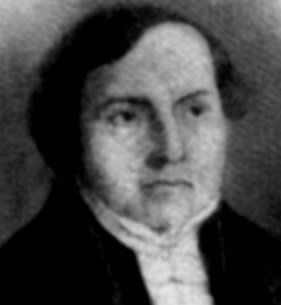
In "Report of the Soldiers That the Disciples Stole the Body of Jesus," Alexander Carson addresses the theological topic of divine providence and human depravity, particularly in the context of the resurrection of Jesus Christ. Carson argues that the actions of the Jewish leaders and the guards at Jesus' tomb reveal profound human corruption and a hardened rejection of truth, underscoring that the rejection of the gospel arises not from a lack of evidence but from a moral aversion to it. He references Matthew 28:11-15, highlighting the absurdity of the soldiers' claims that Jesus' body was stolen while they were asleep, arguing that this narrative, instead of disproving the resurrection, serves as a testament to its truth. The doctrinal significance lies in affirming that only the Holy Spirit can open hearts to the gospel, revealing mankind's inherent need for divine grace to overcome spiritual blindness.
Key Quotes
“No it is hatred to the gospel that is the ground of rejecting it. Men love darkness rather than light because their deeds are evil.”
“The cunning project of the enemies of Jesus was providentially calculated to contribute to the establishment of the truth which it was designed to destroy.”
“The story is worth nothing for the purpose for which it was invented. It served to deceive only those who loved to be deceived.”
“Thus the wrath of man is made to praise God.”
What does the Bible say about the resurrection of Jesus?
The Bible affirms the resurrection of Jesus as a fundamental truth, evidenced by multiple witnesses and fulfilled prophecies.
Matthew 28, 1 Corinthians 15:14
How do we know the resurrection of Jesus is true?
We know the resurrection of Jesus is true through eyewitness accounts, fulfillment of prophecies, and the transformation of the disciples.
1 Corinthians 15:5-7
Why is the resurrection of Jesus important for Christians?
The resurrection of Jesus is crucial for Christians as it confirms His divinity and guarantees eternal life for believers.
Romans 6:5, 1 Corinthians 15:17
Divine Providence not only defeats the most crafty designs of the enemies of the gospel, but makes them subservient to his own purposes, and sometimes employs them to effect the very purpose which they were intended to prevent. So was it in this matter. In the proposal of the chief priests, and the execution of it by the soldiers, we have a manifestation of the inconceivable depravity of the human heart, and a proof that no evidence can enlighten the darkened mind of man, without the leading of the Holy Spirit. The proposal of the chief priests and elders in council implied that they knew that Jesus was risen from the dead, while their hatred to the truth impelled them to discredit it by so wicked a stratagem. They were not only so hardened as not to believe in Jesus on the evidence of his resurrection, which they could not but believe; but they were so unprincipled as to avail themselves of the basest means to hide the evidence from others, which they had before their own eyes. Who can estimate the guilt of this unbelief? They knew that Jesus was risen; they felt that this was proof of his pretensions; yet, to hinder the effect, they bribed the watch to say that, while they slept, the body was stolen by the disciples. Is it, then, for want of sufficient evidence that men reject the gospel? No, it is hatred to the gospel that is the ground of rejecting it. Men love darkness rather than light, because their deeds are evil.
And what shall we say of the watch? They beheld all the wonders at the tomb from which Jesus rose. "And behold, there was a great earthquake; for the angel of the Lord descended from heaven, and came and rolled back the stone from the door, and sat upon it. His countenance was like lightning, and his raiment white as snow: and for fear of him the keepers did shake, and became as dead men." Do they now believe? Are they converted to God? Are their hearts changed? No such thing. They are as dead as they were before—as dead as they who lie in the grave. Instead of becoming the disciples of Jesus from the ocular evidence of his resurrection, and the awful display of the divine glory which took place on that occasion, when a bribe was offered, "they took the money, and did as they were taught." Such is the blindness and hardness of heart in man, that nothing can open his eyes, and change his heart, but the power of the Spirit of the Almighty. The gospel is the only means of conversion, and the Spirit of God is the only agent. The word is mighty, but it is mighty as the sword of the Spirit. A sword as sharp as a razor is as harmless as a rush in the hands of an infant. In the hands of a vigorous and skilful soldier it does dreadful execution.
In this occurrence, then, we have, in the wisdom of Providence, a display of the natural blindness and guilt of man, and proof that no evidence is sufficient, without the Holy Spirit, to raise men to spiritual life. But the cunning project of the enemies of Jesus was providentially calculated to contribute to the establishment of the truth, which it was designed to destroy. The story was, in itself, utterly incredible. The guards could not be supposed to have been all asleep at such a risk to their lives; and they could not depose to a fact which, they alleged, took place while they slept. Besides, had they really slept, it never would have been confessed, unless they had been actually detected. Now, they were not found asleep. What made them their own accusers? Nothing but the bribe, and security of impunity. The story is worth nothing for the purpose for which it was invented. It served to deceive only those-who loved to be deceived.
But the story is of great importance in proof of the resurrection. It is the confession of the enemies of Jesus on the spot at the time, that the body was really out of the tomb. As the account given by the bribed witnesses is self-evidently false, there is increased evidence that he was really raised from the dead. "This saying," we are told by Matthew, "was commonly reported among the Jews," to the time of his writing. There can, therefore, be no manner of doubt that, in one way or other, the body of Jesus left the tomb. As the story of the watch is utterly incredible, the only rational conclusion is, that he was raised as the Scriptures report. Thus, the wrath of man is made to praise God.

Comments
Your comment has been submitted and is awaiting moderation. Once approved, it will appear on this page.
Be the first to comment!