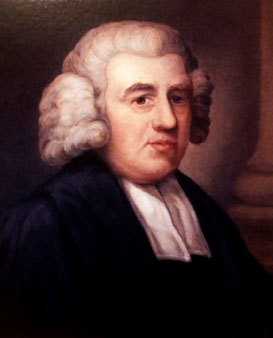
In John Newton's sermon titled "Messiah Rising From the Dead," the central theological topic is the resurrection of Jesus Christ and its significance in Christian faith. The author argues that Christ's resurrection is the keystone of the Gospel, asserting that it not only validates His previous teachings but is essential for the hope of salvation. Newton links this resurrection to various Scriptural references, notably Psalm 16:10, Acts 2:27, and 1 Corinthians 15:17, demonstrating that the resurrection is foretold and foundational for the Christian faith, as without it believers would remain in their sins. The practical significance of this doctrine is profound, as it underlines believers' justification, offers hope against despair, and assures them of their eventual resurrection with Christ, encouraging a life of faith and dependence on God.
Key Quotes
“His resurrection therefore is the grand principal fact upon which the truth and importance of Christianity rests.”
“As MESSIAH was delivered...for our offences so they know that He was raised again for our justification.”
“His resurrection is the pledge and pattern of ours.”
“When He has raised their expectations by His promises, He permits as it were a temporary death to overcloud their prospect.”
What does the Bible say about Christ's resurrection?
The Bible asserts that Christ's resurrection is foundational to the Christian faith, confirming His victory over sin and death.
Romans 1:4, Romans 4:25, 1 Corinthians 15:17
How do we know that Christ’s resurrection is true?
The truth of Christ's resurrection is supported by multiple eyewitness accounts and transformative evidence in the lives of believers.
Acts 2:24
Why is the resurrection of Christ important for Christians?
Christ's resurrection is crucial because it secures believers’ justification and assures them of eternal life.
Romans 4:25, 1 Corinthians 15:20
What effects does the resurrection have on believers?
The resurrection empowers believers to live free from sin and instills hope and confidence in their relationship with God.
Philippians 3:10, Colossians 3:1
Psalm 16:10: For Thou wilt not leave my soul in hell, neither wilt Thou suffer Thine Holy One to see corruption.
That the Gospel is a divine revelation may be summarily proved from the character of its Author. If an infidel was so far divested of prejudice and prepossession, as to read the history of Jesus Christ, recorded by the Evangelists, with attention, and in order to form his judgment of it, simply and candidly, as evidence should appear; I think he must observe many particulars in his spirit and conduct, so very different from the prevailing sentiments of mankind, as to convince him, that man, in his present state, could not possibly have conceived the idea of such a character. Poets, and historians, have often employed their powers in delineating, what appeared to them, the great, and the excellent, in human conduct. But how different are the pictures of their admired heroes, sages and legislators, from the portrait of the Saviour, as it is drawn, with the utmost simplicity, by plain, unlettered men, who, without art or affectation, only describe what they profess to have seen and heard. I fix, at present, upon a single consideration, which, perhaps, cannot be expressed more properly, or forcibly, than in the words of an ingenious * writer, now living --
"He [ Jesus Christ ] is the only founder of a religion, in the history of mankind, which is totally unconnected with all human policy and government, and, therefore, totally unconducive to any worldly purpose whatever. All others, Mahomet, Numa, and even Moses himself, blended their religious institutions with their civil, and by them, obtained dominion over their respective people; but Christ neither aimed at, nor would accept of any such power. He rejected every object (John 18:36) which all other men pursue, and made choice of those which others fly from and are afraid of. He refused power, riches, honours, and pleasure; and courted poverty, ignominy, tortures, and death. Many have been the enthusiasts and impostors, who have endeavoured to impose on the world, pretended revelations; and some of them from pride, obstinacy, or principle, have gone so far, as to lay down their lives, rather than retract: but I defy history to show one, who ever made his own sufferings and death (John 12:24, 32, 33) , a necessary part of his original plan, and essential to his mission. This Christ actually did, He foresaw, foretold, declared their necessity, and voluntarily endured them (John 12:33, 34) ."
* Soame Jenyns (1704-1787) - "Internal Evidence of the Christian Religion"
The death of our Lord was, indeed, essential to His plan; as such, it was constantly in His view, and He often spoke of it. Probably it was the whole of His enemies' plan, and when they saw Him dead, buried, and the sepulchre sealed, they triumphed in their success, and expected to hear of Him no more. But the Scriptures, which were read in their synagogues every Sabbath day, foretold His resurrection from the dead. The text before us, if there were no other, is a sufficient proof of this, to those who acknowledge the authority of the New Testament, since it is expressly applied to Him by the Apostles, Peter and Paul.
The word in the Hebrew text before us, rendered, in our version, Soul, is used in different senses. According to the connection in which it stands, it signifies breath, life, soul, or spirit; and sometimes dead body. The corresponding Greek word, where the Apostle quotes this verse (Acts 2:27) , has, likewise, various significations. And the original words answering to Hell , signify both the invisible world; or the state of the dead, and sometimes the grave. Notwithstanding this seeming diversity, we are at no loss here for the precise sense. Scripture is the best interpreter of itself. It is evidently the Apostle's design to prove that the Psalmist foresaw and foretold the resurrection of that body which was taken down dead from the cross, and laid in Joseph's tomb. With this body our Lord arose on the third day, according to the Scriptures.
Though MESSIAH was, for our sakes, treated as a malefactor, all who were immediately concerned in His death, were constrained (as we have seen) to declare His innocence. But He was worthy of a more solemn and authoritative justification. Accordingly, He was declared to be the Son of God, with power, by His resurrection from the dead (Romans 1:4)
The Apostle expounds Thine Holy One, by the word flesh (Acts 2:26) . The human nature, the body formed by the immediate power of God, and born of a virgin, was holy. --It was, A holy thing (Luke 1:35) Perfect and pure, and therefore naturally not mortal, though subject to death for us. In this nature, the Son of God was charged with sins not His own; He became willingly responsible for many (Matthew 20:28) . Whatever was necessary on the behalf of sinners, to render their forgiveness consistent with the honour of the law, justice, truth, and government of God, was exacted of Him, and He performed, and paid, to the utmost. He made a full atonement for sin; and though He had power over His life, He hung hour after hour in agonies upon the cross, till He said, It is finished . Then, He resigned His spirit into the hands of His Heavenly Father. He was afterwards buried. But having finished His whole undertaking, destroyed death, and him that had the power of it, and opened the way to the Kingdom of Heaven, in favour of all who should believe in Him, it was not possible that He should be detained in the grave (Acts 2:24) He had power, likewise, to resume the life He had laid down for His sheep; and He arose the third day, to exercise all power and authority in heaven and in earth.
His resurrection, therefore, is the grand principal fact, upon which the truth and importance of Christianity rests. For though Christ died, if He had not risen again, your faith, and our preaching, would be in vain. We should be yet in our sins (I Corinthians 15:17) And though it was not necessary that His resurrection should have been so publicly known, at the time, as His crucifixion, the evidence for it is strong and decisive. No one point of ancient history is capable of such clear, accumulated proof. The apostles frequently saw Him, conversed with Him, ate and drank with Him, and were assured, that it was He, by many infallible proofs. They could not be deceived themselves, nor could they have any temptation to deceive others. They declared His resurrection to the very people who put Him to death; and they confirmed it by many indisputable miracles, which they performed in His name. They persevered in this testimony, in defiance of the malice of the Jews, and the scorn of the heathens. And by this doctrine of a crucified risen Saviour, though unsupported by the patronage of human power, yea, though opposed by it, in every place, they effected that change in the moral world wherever they went, which the philosophers had not been able to produce, by all their instructions, in a single instance; turning men, whom they found under the strongest prejudices of education and habit, from darkness to light, and from the worship of dumb idols to serve the living and true God (I Thessalonians 1:9)
But there are proofs of this point which depend not upon arguments or history, which require neither learning, genius, nor study to comprehend; but are equally adapted to persons of all capacities, and in all circumstances. These are the effects which this doctrine produces on the hearts of those who truly receive it upon the authority of Scripture, under the influence of the Holy Spirit, whose office it is to open the eyes of the mind, to take of the things of Jesus, (what the Scripture reveals of His person, offices, and glory) and to present them, with infallible light and evidence, to those who humbly yield themselves to His teaching. These are made partakers of the power of His resurrection (Philippians 3:10) It delivers them from guilt and fear, animates them with confidence towards God, weans them from the love and spirit of this evil world, inspires them with great and glorious hopes, and delivers them from the fear of death. They are risen with Christ, by faith, and seek the things which are above (Colossians 3:1) . where they know their Lord and Saviour is seated in glory.
I do but touch upon these particulars at present, because the subject will come under our consideration again, from a subsequent passage in the Oratorio . Yet I would not wholly omit leading your reflections to them, though what I briefly offer now, may make, what I shall then offer (if my life is prolonged to proceed so far), appear under the disadvantage of a repetition of the same thoughts. Indeed, I know not how to place the proof of this capital doctrine in a light entirely new. The most satisfactory proofs are the most obvious; and it would be folly to substitute weaker in their place, for the sake of novelty. But if I should live to resume the subject, some of you, who are now present, may not live to hear me. So far as concerns the fact, I may hope that the most, or all of you, are believers, and that you are already persuaded in your minds that the Lord is risen indeed! (Luke 24:34) I am not preaching to Jews, or Mohammedans, but to professed Christians. But permit me to ask, What influence this truth has upon your hopes, your tempers, and your conduct? The powers of darkness know that Christ is risen. They believe, they feel, they tremble. I hope none of you will be content with such a faith as may be found in fallen angels. As surely as He is risen, He will at length return to judge the world. Behold He cometh in the clouds, and every eye shall see Him! They who are prepared to meet Him, and who long for His appearance, have reason to rejoice that He once died, and rose again!
Many are the advantages which true Christians derive from a spiritual and enlightened knowledge of this doctrine. I will mention a few.
(1.)
As MESSIAH was delivered, that is delivered up, as a hostage to the demands of justice, for our offences, so they know that He was raised again for our justification (Romans 4:25) By virtue of that union, which subsists between MESSIAH, as the Head of His Body the Church, and all His members; that is, all in the successive ages of the world, who believe in Him by a faith of divine operation: He is their legal representative; He and they are considered as one. His sufferings, His whole humiliation and obedience unto death, is so imputed to them, that they, thereby, are exempted from condemnation; and though not from all sufferings, yet, from all that is properly penal, or, strictly, a punishment. What they suffer, is only in a way of discipline or chastisement; and to them a token, not of wrath, but of love. On the other hand, as He by His resurrection, was vindicated, justified from the reproaches of His enemies, declared to be the Son of God with power, and raised to glory; they have fellowship with Him herein. God exalted Him to glory, and gave Him a name above every name, that their faith and hope might be in God (I Peter 1:21) They are not only pardoned, but accepted in the Beloved. And after this state of discipline is ended, they shall be treated as if they had never sinned. For if sins are sought for, in that day they shall not be found. If any charge should be brought against them, it shall be overruled -- by this comprehensive unanswerable plea -- Christ that died, yea, rather, that is risen again; appears in the presence of God, acknowledges them as His own, and makes intercession for them (Romans 8:33, 34) . Among men, a criminal may obtain a pardon, may escape the sentence he has deserved, and yet be left in a destitute and miserable condition. But justification is God's manner of pardoning sinners, according to the sovereignty and riches of His grace in the Son of His love. Those whom He pardons, he also justifies; and whom He justifies, He also glorifies. And even now in this life, though it doth not yet appear what they shall be, though their present privileges are far short of what they hope for, and though eye hath not seen, nor ear heard, nor hath it entered into the heart of man, to conceive what God hath prepared for them (I Corinthians 2:9) ; yet even now are they the children of God (I John 3:2) --and in the midst of their trials and infirmities, though conscious of much defect, and many defilements, in their best hours and services; and though they have not forgotten their iniquities and provocations, when they lived without God in the world, yet, according to the measure of their faith, exercised upon their Saviour, who was raised for their justification, they can rejoice in the knowledge of their acceptance, and rely upon Him for their perseverance; and they dare approach the great, holy, heart-searching God, as to a Father, and pour out their hearts before Him with greater freedom than they can use to their dearest earthly friends. And while they feel and confess themselves unworthy of the smallest of His mercies, they are not afraid to ask for the greatest blessings His bounty can bestow, even to be set as a seal upon His heart, and upon His arm, to be filled with all His communicable fulness, and to claim Him as their everlasting portion.
(2.)
The resurrection of Christ from the dead, is a pledge and specimen of that almighty power which is engaged on their behalf, to overcome all the obstacles, difficulties and enemies they are liable to meet with in their pilgrimage, which threaten to disappoint their hopes, and to prevent them from obtaining their heavenly inheritance. The first communication of a principle of faith and spiritual life to their hearts, whereby they are delivered from the dominion of sin, and from the spirit and love of the world, is attributed to the exceeding greatness of that might power, which raised the dead body of their Lord from the grave, and set Him at His own right hand, far above all principality and might, and every name that is named (Ephesians 1:19-21) And often the Church, collectively, in its militant state, and the individuals which compose it, in their personal concerns, have been brought, to outward appearance, exceeding low. Their enemies have seemed upon the point of triumphing, and saying, Down with them, even to the ground. Such was the boast of the Jewish rulers, when they had slain the Shepherd, and dispersed His flock. But it was a short-lived boast. He arose, He ascended, He took possession of His Kingdom for Himself, and for them. He poured out His Holy Spirit upon them, and they went forth preaching His Word, which spread like the light of advancing day, from Judea to Samaria, and to the distant parts of the earth. The united force of the powers of hell and earth, endeavoured to suppress it, but in vain. Many nations and kingdoms laboured to extirpate the very name of Christianity from among men, but they successively perished in the attempt; and the cause, against which they raged, is still preserved. It is founded upon a Rock, and the gates of hell cannot prevail against it (Matthew 16:18) Nor can any weapon prosper that is formed against the weakest and meanest of those who sincerely espouse this cause. He, to whom they have devoted and entrusted themselves, has promised that none shall pluck them out of His hands (John 10:28) And while He remains faithful to His Word, and able to fulfill it, they shall be safe. Yet they are often pressed above measure, beyond strength, insomuch that they, perhaps, despair even of life. But when they are at the lowest, the Lord is their helper; and they are taught, by the exigencies they pass through, to trust, not in themselves, but in God who raiseth the dead (II Corinthians 1:9) . It is, indeed, the Lord's usual method of training up His people, to an habitual dependence upon Himself. When He has raised their expectations by His promises, He permits, as it were, a temporary death to overcloud their prospect; and that which He has said He will surely do for them, appears for a season, to the judgment of sense, impracticable and hopeless. We might illustrate this point at large from the history of Abraham, of Israel in Egypt, of David, and of the rebuilding of the second temple. And I doubt not, but it might be illustrated from the history of many in this assembly. If you have been walking with God for any considerable time, you have met with turns and changes, which have almost put you to a stand. You have been, and perhaps now are, in such circumstances that you feel you have no resource in yourself, and you are sure that the help of man cannot relieve you; but while your help is in the name of the LORD who made heaven and earth (Psalm 124:8) , and while you are warranted to trust in Him, who raiseth the dead, you have no just reason to despond. It was a dark season with the disciples, when their Lord, whom they loved and in whom they trusted, that it had been He who should have redeemed Israel (Luke 24:21) , was condemned, and put to death. But the appointed third day relieved their fears, and turned their mourning into joy.
(3.)
His resurrection is the pledge and pattern of ours. As certainly as Christ the firstfruits is risen, so certainly shall they that are Christ's arise at His coming. And each of His people shall arise, " aliusque & idem" -- another, and yet the same. Their bodies, though properly their own, shall be changed, and fashioned like unto His glorious body (Philippians 3:21) This corruptible must put on incorruption; and the body, which is sown in dishonour and weakness, be raised in power and glory. Flesh and blood, in its present state, cannot inherit the Kingdom of God. The body, in this life, is a clog and a burden to those who place their chief happiness in the service of God, and in communion with Him. It is a vile body, defiled by sin, and it defiles their best desires and noblest efforts. Even the grace of the Holy Spirit, by which they live, though perfectly pure in itself, is debased when communicated to them, and exercised under the disadvantages of a sinful nature, as the best wine, will receive a taint, if poured into a foul vessel. The body, in another view, is a prison in which the soul, confined and pent up, is limited in its operations, and impeded in its perceptions of divine things. Though we are probably surrounded by the glorious realities of the spiritual world, only short and transient glances of them are discoverable by us; we see but by reflection, and darkly (I Corinthians 13:12) ; we know but in part, and should know nothing of them, but for the good report of the Word of God. Farther, the body, as it is the seat of innumerable infirmities, and the medium which connects us with the calamities incident to this mortal state, is often a great hindrance to our most desirable enjoyments. Pain and sickness call off the attention, and indispose our faculties, when we wish to be most engaged in prayer, detain us from the ordinances, or prevent the pleasure we hope for in waiting upon the Lord in them. But our new, spiritual, and glorified bodies, will be free from all defilement, or defect. They will be completely qualified to answer the best wishes, and most enlarged activity of the soul. Then, but not till then, we hope to be all eye, all ear, always upon the wing of His service, and perfectly conformed to His image, in light, holiness, and love; for then we shall see Him as He is, without any interposing veil or cloud (I John 3:2)

Comments
Your comment has been submitted and is awaiting moderation. Once approved, it will appear on this page.
Be the first to comment!