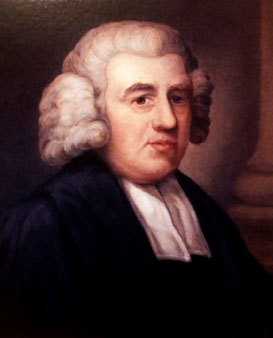
In "More Than a Calvinist," John Newton addresses the doctrine of knowledge versus experience in the Christian life, highlighting the temptation for believers to succumb to arrogance when possessing theological understanding. Newton argues that true wisdom is not merely intellectual but is measured by how one’s understanding influences daily conduct and spiritual experience. He references Scripture to illustrate how believers often fail to apply their knowledge of God's omnipresence and sovereignty to their lives, leading to inconsistency in faith and behavior (e.g., Proverbs 3:7 and James 4:6). The significance of this doctrine underscores the need for humility, reminding Christians that mere intellectual ascent to truth does not equate to spiritual maturity, and emphasizes the necessity of continual dependence on God's grace throughout the believer's journey.
Key Quotes
“If any man think that he knoweth any thing, he knoweth nothing yet as he ought to know.”
“A plain proof that our knowledge is more notional than experimental.”
“He learns to cease from his own understanding, to be ashamed of his best endeavours, to abhor himself in dust and ashes, and to glory only in the Lord.”
“It is an invariable maxim in his kingdom that whosoever exalteth himself shall be abased.”
What does the Bible say about God's sovereignty?
The Bible teaches that God is sovereign over all creation and has the right to act according to His will.
Romans 9:20-21
Why is understanding God's omnipresence important for Christians?
Understanding God's omnipresence is crucial as it reminds Christians to conduct themselves in holiness, knowing God is always watching.
Proverbs 15:3
How do we know that the doctrine of election is true?
The doctrine of election is affirmed in Scripture where God chooses some for salvation based on His grace and purpose.
Ephesians 1:4-5, Romans 8:29-30
Why is the concept of grace important for Christians?
Grace is vital for Christians as it underscores God's unmerited favor and empowerment for daily living.
Ephesians 2:8-9, 2 Corinthians 12:9
To be enabled to form a clear, consistent, and comprehensive judgment of the truths revealed in the Scripture, is a great privilege; but they who possess it are exposed to the temptation of thinking too highly of themselves, and too meanly of others, especially of those who not only refuse to adopt their sentiments, but venture to oppose them. We see few controversial writings, however excellent in other respects, but are tinctured with this spirit of self-superiority; and they who are not called to this service (of writing) if they are attentive to what passes in their hearts, may feel it working within them, upon a thousand occasions; though so far as it prevails, it brings forcibly home to ourselves the charge of ignorance and inconsistence, which we are so ready to fix upon our opponents. I know nothing as a means more likely to correct this evil, than a serious consideration of the amazing difference between our acquired judgment, and our actual experience; or, in other words, how little influence our knowledge and judgment have upon our own conduct. This may confirm to us the truth and propriety of the apostle's observation, "If any man think that he knoweth any thing, he knoweth nothing yet as he ought to know." Not that we are bound to be insensible that the Lord has taught us what we were once ignorant of; nor is it possible that we should be so; yet because, if we estimate our knowledge by its effects, and value it no farther than it is experimental and operative (which is the proper standard whereby to try it), we shall find it so faint and feeble as hardly to deserve the name.
How firmly, for instance, are we persuaded, that God Is omnipresent! Great as the difficulties may be which attend our conceptions of this point, the truth itself is controverted by few. It is generally acknowledged by unawakened persons and I may add, too frequently known even by believers, as if they knew it not. If the eyes of the Lord are in every place, how strong a guard should this thought be upon the conduct of those who profess to hear him! We know how we are often affected when in the presence of a fellow-worm; if he is one on whom we depend, or who is considerably our superior in life, how careful we are to compose our behaviour, and to avoid whatever might be deemed improper or offensive! Is it not strange that those who have taken their ideas of the divine majesty, holiness and purity, from the Scriptures, and are not wholly insensible of their inexpressible obligations to regulate all they say or do by his precepts, should upon many occasions be betrayed into improprieties of behaviour from which the presence of a nobleman, or prince, would have effectually restrained them, yea, sometimes perhaps even the presence of a child? Even in the exercise of prayer, by which we profess to draw near the Lord, the consideration that his eye is upon us has little power to engage our attention, or prevent our thoughts from wandering like the fool's eye, to the ends of the earth. What should we think of a person, who, being admitted into the king's presence, upon business of the greatest importance, should break off in the midst of his address, to pursue a butterfly? Could such an instance of weakness be met with, it would be but a faint emblem of the inconsistencies which they who are acquainted with their own hearts, can often charge themselves with in prayer. They are not wholly ignorant in what a frame of spirit it becomes a needy dependent sinner to approach that God, before whom the angels are represented as vailing their faces; yet, in defiance of their better judgment, their attention is diverted from him with whom they have to do, to the merest trifles. They are not able to realize that presence with which they behave themselves to be surrounded, but speak as if they were speaking into the air . Farther, if our sense that God is always present was in any good measure answerable to the conviction of our judgment, would it not be an effectual preservative from the many importunate though groundless fears with which we are harassed! He says, "Fear not, I am with thee;" he promises to be a shield and a guard to those who put their trust in him, yet though we profess to believe his word, and to hope that he is our protector, we seldom think ourselves safe, even in the path of duty. a moment longer than danger is kept out of our view. Little reason have we to value ourselves upon our knowledge of this indisputable truth, when it has no more effective and habitual influence upon our conduct.
The doctrine of God's sovereignty likewise, though not so generally owned as the former, is no less fully assented to by those who are called Calvinists. We zealously contend for this point in our debates with the Armimians; and are ready to wonder that any should be hardy enough to dispute the Creator's right to do what he will with his own. While we are only engaged in defense of the election of grace, and have a comfortable hope that we are ourselves of that number, we seem so convinced, by the arguments the Scripture affords us in support of the truth, that we can hardly forbear charging our adversaries with perverse obstinacy and pride, for opposing it. Undoubtedly the ground of this opposition lies in the pride of the human heart, but this evil principle is not confined to any party: and occasions frequently arise, when they who contend for the divine sovereignty are little more practically influenced by it than their opponents. This humiliating doctrine concludes as strongly for submission to the will of God, under every circumstance of life, as it does for our acquiescing in his purpose to have mercy. But, alas! how often do we find ourselves utterly unable to apply it, so as to reconcile our spirits to those afflictions which he is pleased to allot us. So far as we are enabled to say, when we are exercised with poverty, or heavy losses or crosses, . 'I was dumb and opened not my mouth, because thou didst it," so far, and no farther, are we truly convinced, that God has a sovereign right to dispose of us and all our concemments as he pleases. How often, and how justly at such seasons, might the argument we offer to others, as sufficient to silence all their objections, be retorted upon ourselves, "Nay but, O man, who art thou that repliest against God? shall the thing formed say unto him that formed it, Why hast thou made me thus?" A plain proof that our knowledge is more notional than experimental. What an inconsistency, that while we think God is just and righteous in withholding from others the things which pertain to their everlasting peace, we should find it so hard to submit to his dispensations to ourselves in matters of unspeakably less importance!
But the Lord's appointments, to those who fear him, are not only sovereign, but wise and gracious. He has connected their good with his own glory, and is engaged, by promise, to make all things work together for their advantage. He chooses for his people better than they could choose for themselves; if they are in 'heaviness, theme is a need-be for it, and he withholds nothing from them but what upon the whole it is better they should be without. Thus the Scriptures teach, and thus we profess to believe. Furnished with these principles, we are at no loss to suggest motives of patience and consolation to our brethren that are afflicted; we can assure them, without hesitation, that if they are interested in the promises, their concerns are in safe hands; that the things which at present are not joyous but grievous. shall in due season yield the peaceful fruits of righteousness, and that their trials are as certainly mercies as their comforts. We can prove to them, from the history of Joseph, David, Job, and other instances recorded in Scriptures, that, notwithstanding any present dark appearances, it shall certainly be well with the righteous; that God can and will make crooked things straight; and that he often produces the greatest good from those events which we are apt to look upon as evil. From hence we can infer, not only the sinfulness, but the folly of finding fault with any of his dispensations. We can tell them, that at the worst the sufferings of the present life are not worthy to he compared with the glory that shall be revealed; and that therefore, under, the greatest pressures, they should so weep as those who expect in a little time to have all their tears wiped away. But when the case is our own, when we are troubled on every side, or touched in the tenderest part, how difficult it is to feel the force of these reasonings, though we know they are true to a demonstration! Then, unless we are endued with fresh strength from on high, we are as liable to complain and despond as if we thought our afflictions sprang out of the ground, and the Lord had forgotten to be gracious.
I might proceed to show the difference between our judgment when most enlightened, and our actual experience, with respect to every spiritual truth. We know there is no proportion between time and eternity, between God and the creature, the favour of the Lord and the favour or the frowns of men; and yet often, when these things are brought into close competition, we are sorely put to it to keep stead-fast in the path of duty; nay without new supplies of grace, we should certainly fail in the time of trial, and our knowledge would have no other effect than to render our guilt more inexcusable. We seem to be sure that we are weak, sinful, fallible creatures, as we are that we exist and yet we are prone to act as if we were wise and good. In a word, we cannot deny, that a great part of our knowledge is, as I have described it, like the light of the moon, destitute of heat and influence; and yet we can hardly help thinking of ourselves too highly upon the account of it.
May we not say with the Psalmist, "Lord, what is man!" yea, what an enigma, what a poor inconsistent creature is a believer! He knows the Lord; he knows himself. His understanding is enlightened to apprehend and contemplate the great mysteries of the gospel. He has just ideas of the evil of sin, the vanity of the world, the beauties of holiness, and the nature of true happiness. He was once "darkness, but now he is light in the Lord." He has access to God by Jesus Christ; to whom he is united, and in whom he lives by faith. While the principles he has received are enlivened by the agency of the Holy Spirit, he can do all things. He is humble, gentle, patient, watchful, faithful. He rejoices in afflictions, triumphs over temptations, lives upon the foretastes of eternal glory, and counts not his life dear, so he may glorify God his Saviour, and finish his course with joy. But his strength is not his own; he is absolutely dependent, and is still encompassed with infirmities. and burdened with a depraved nature. If the Lord withdraws his power, he becomes weak as another man, and drops, as a stone sinks to the earth by its own weight. His inherent knowledge may be compared to the windows of a house, which can transmit the light, but cannot retain it. Without renewed and continual communications from the Spirit of grace, he is unable to withstand the smallest temptation, to endure the slightest trial, to perform the least service in a due manner, or even to think a good thought. He knows this, and yet he too often forgets it. But the Lord reminds him of it frequently, by suspending that assistance without which he can do nothing. Then he feels what he is, and is easily prevailed upon to act in contradiction to his better judgment. This repeated experience of his own weakness teaches him by degrees where his strength lies; that it is not in any thing he has already attained, or can call his own, but the grace, power, and faithfulness of his Saviour. He learns to cease from his own understanding, to be ashamed of his best endeavours, to abhor himself in dust and ashes, and to glory only in the Lord.
From hence we may observe, that believers who have most knowledge, are not therefore necessarily the most spiritual. Some may and do walk more honorably and more comfortably with two talents, than others with five. He who experimentally knows his own weakness, and depends simply upon the Lord, will surely thrive, though his acquired attainments and abilities may be but small; and he who has the greatest gifts, the clearest judgment, and the most extensive knowledge, if he indulges high thoughts of his advantages, is in imminent danger of mistaking, and falling at every step; for the Lord will suffer none whom he loves to boast in themselves. He will guide the meek with his eyes, and fill the hungry with good things; but the rich he sendeth empty away. It is an invariable maxim in his kingdom, that whosoever exalteth himself, shall be abased; but he that humbleth himself, shall be exalted.

Comments
Your comment has been submitted and is awaiting moderation. Once approved, it will appear on this page.
Be the first to comment!