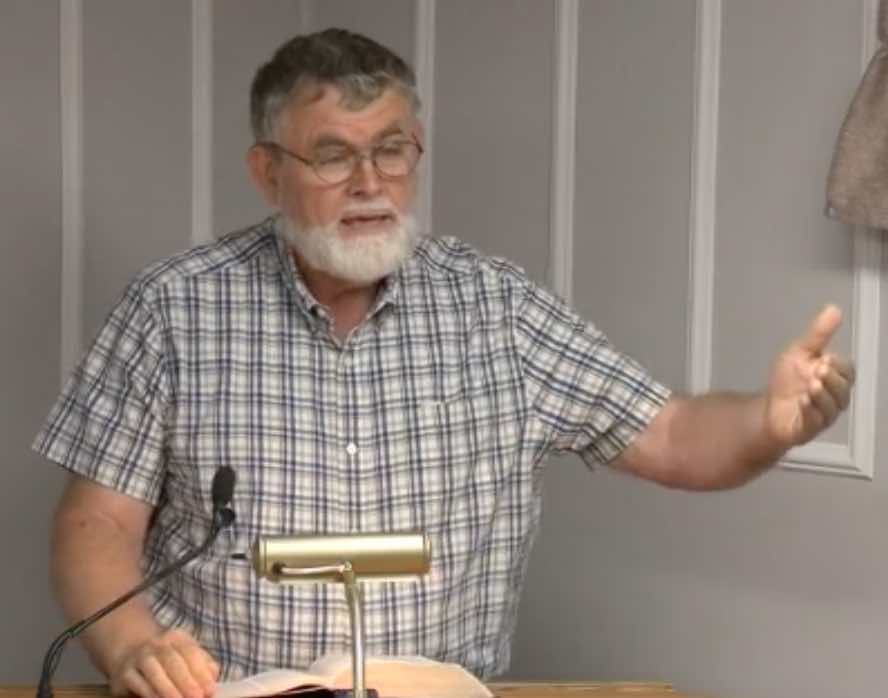
Mike McInnis's sermon "Smooth Words" addresses the theological topic of authentic worship versus the influence of pagan practices in the worship of the true God. He argues that throughout biblical history, the Israelites often adopted practices from surrounding cultures, which parallels current trends in the church where entertainment and education overshadow true worship. McInnis cites Acts 20:29-30 to highlight Paul's warning of false teachers and emphasizes that ministry is a calling that belongs to all believers, not just a professional clergy. The practical significance of this message lies in the necessity of being rooted in Scripture and dependent on the Holy Spirit, rather than relying on human wisdom or charisma, to fulfill the gospel mandate effectively.
Key Quotes
“Men are by their very nature religious creatures. All societies, cultures, and nationalities have one or more religions that they keep.”
“Ministry today is defined as a profession which one decides to enter. Ministry, however, is not a profession for a certain few, but is the work which all of God's children are called to do.”
“God lays this burden upon whom he will, and no man can silence that nor overturn it.”
“Do you rejoice in nothing but the preaching of Jesus Christ and Him crucified? Or are you enamored with men with smooth words and exciting music?”
The Bible teaches that ministry is a calling from God regardless of professional status.
The Bible emphasizes that ministry is not merely a profession chosen by individuals but a divine calling bestowed upon God’s people. In Ephesians 4:11-12, Paul outlines that Christ gave various roles, including apostles, prophets, and teachers, not for personal gain but for the edification of the body of Christ. This highlights that every believer, while not having the same gifts, is called to participate in ministry for the benefit of the Church. Additionally, as Jeremiah and Paul illustrate, the burden of preaching the gospel is a necessity laid upon those whom God has called, and it is not to be treated lightly or pursued as a mere career choice.
Ephesians 4:11-12, Jeremiah 1:5, 1 Corinthians 9:16
Preaching is essential as it communicates God’s message and underpins the faith of believers.
Preaching holds a central place in the church as it is the primary means through which God’s message is delivered. According to Romans 10:14-15, faith comes from hearing the Word of God, and preachers are essential to this process. As those sent by God, preachers use their calling to bring forth the gospel, ensuring that the congregation is nourished with truth. Furthermore, the reliance on the Holy Spirit in preaching serves to emphasize that the effectiveness of a sermon lies not in the speaker's eloquence, but in the power of God. This establishes preaching as a vital aspect of maintaining a vibrant and faithful church community.
Romans 10:14-15, 1 Corinthians 2:4-5
Reliance on the Holy Spirit is crucial as it empowers preaching and builds the church.
The ministry of preaching is ineffective if it relies solely on human wisdom or eloquence. This is a key element in Reformed theology, which underscores dependence on the Holy Spirit. Paul articulates this in 1 Corinthians 2:4-5, where he explains his preaching was not with enticing words of man's wisdom, but was empowered by the Spirit. This reliance ensures that the message of Christ, especially the centrality of Christ crucified, remains the focal point. Without such reliance, ministerial efforts may veer into entertainment or emotional manipulation rather than bringing the transformative truth of the gospel to congregants. Therefore, it is vital that both preachers and the church community actively seek the Holy Spirit's guidance in all aspects of ministry.
1 Corinthians 2:4-5, Psalm 127:1
Comments
Your comment has been submitted and is awaiting moderation. Once approved, it will appear on this page.
Be the first to comment!
