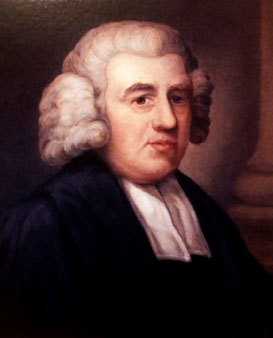
In John Newton's sermon titled "The Extent of Messiah's Spiritual Kingdom," the central theological topic revolves around the nature and expansion of Christ's Kingdom as prophesied in Scripture. Newton argues that although the Kingdom of God appears to be underdeveloped and imperfect in this age, it is nonetheless being progressively established according to God's perfect plan, as outlined in verses like Revelation 11:15 and Isaiah 2:2-4. He contends that many current events and even political leaders, often unaware, serve God's purposes to promote the Gospel. Newton supports his claims through numerous Scripture references, emphasizing the prophetic assurances that the Kingdom will ultimately flourish despite current moral and spiritual deficiencies. The practical significance of this message lies in its encouragement for believers to trust in God's sovereignty and the eventual triumph of His Kingdom, fostering hope during times of uncertainty.
Key Quotes
“His Kingdom founded upon the Rock of Ages is building, advancing, and the gates of hell shall not be able to withstand its progress.”
“Though things will not always remain in their present disordered state, the Word of the Lord shall prevail over all discouragements and opposition.”
“Can the Scriptures be broken? By no means; Heaven and earth shall pass away but not one jot or tittle of His word shall fail of accomplishment.”
“The spirit of party prejudice bigotry and interest... furnish men with plausible pretences for indulging their unsanctified passions.”
What does the Bible say about the Kingdom of God?
The Bible describes the Kingdom of God as a spiritual realm established by Christ, characterized by peace, righteousness, and the fulfillment of God's promises (Revelation 11:15).
Revelation 11:15, Isaiah 2:2-4, Isaiah 11:6-9
How do we know God's promises will be fulfilled?
We know God's promises will be fulfilled because Scripture assures us that His Word cannot fail, and His counsel shall stand (Isaiah 46:10).
Isaiah 46:10, 2 Corinthians 1:20
Why is the extension of Christ's kingdom important for Christians?
The extension of Christ's kingdom is vital for Christians as it embodies the fulfillment of God's redemptive plan and brings hope for universal peace and righteousness (Isaiah 60:12).
Isaiah 60:12, 2 Corinthians 5:20
Revelation 11:15: The kingdoms of this world are become the kingdoms of our Lord, and of His Christ, and He shall reign for ever and ever!
The Kingdom of our Lord in the heart, and in the world, is frequently compared to a building or house, of which He Himself is both the Foundation and the Architect (Isaiah 28:16 and 54:11, 12) . A building advances by degrees (I Corinthians 3:9; Ephesians 2:20-22) , and while it is in an unfinished state, a stranger cannot, by viewing its present appearance, form an accurate judgment of its design, and what the whole will be, when completed. For a time, the walls are of unequal height, it is disfigured by rubbish, which at the proper season will be taken away; and by scaffolding, which, though useful for carrying on the building, does not properly belong to it, but will likewise be removed when the present temporary service is answered. But the architect Himself proceeds according to a determinate plan, and His idea of the whole work is perfect from the beginning. It is thus the Lord views His people in the present life. He has begun a good work in them, but as yet every part of it is imperfect and unfinished; and there are not only defects to be supplied, but deformities and encumbrances that must be removed. Many of the dispensations [occurrences; experiences] and exercises, which contribute to form their religious character, do not properly belong to that work which is to abide, though they have a subservience to promote it. When that which is perfect is come, the rest shall be done away.
And thus, although the growth and extent of His Kingdom is the great scope and object of His Providence, to which all the revolutions that take place in the kingdoms of this world shall be finally subservient; yet the steps by which He is carrying forward His design, are, for the most part, remote from the common apprehensions of mankind; and, therefore, seldom engage their attention. His Kingdom, founded upon the Rock of Ages, is building, advancing, and the gates of hell shall not be able to withstand its progress. Only detached and inconsiderable parts of the plan are as yet visible, and the beauties are everywhere obscured by attendant blemishes. But His counsel shall stand, and He will do all His pleasure. Princes and statesmen seldom think of Him, are seldom aware that in pronouncing their own schemes, they are eventually fulfilling His purposes, and preparing the way to promote the cause which they despise, and often endeavour to suppress. But thus it is. Sometimes He employs them more directly as His instruments, and when they are thus engaged in His work, their success is secured. So Cyrus, whom Isaiah mentioned by name (Isaiah 45:1-5) long before his birth, as the appointed deliverer of Israel from their captivity, prospered in his enterprises, being guided and girded by Him whom he knew not, and established his own power upon the ruins of the Assyrian monarchy. The Roman Empire likewise increased and prospered from small beginnings, that a way might be opened, in the proper season, for the destruction of the Jewish economy, and for facilitating the preaching of the Gospel. And posterity will see that the principal events of the present age, in Asia and America, all have a tendency to bring forward the accomplishment of my text; and are leading to one grand point, the spreading and establishment of the Church and Kingdom of our Lord. His plan is unalterably fixed. He has said it, and it shall be done. Things will not always remain in their present disordered state. And though this desirable period may be yet at a distance, and appearances very dark and unpromising, the Word of the Lord shall prevail over all discouragements and opposition.
Prophecies which are not yet fulfilled will necessarily be obscure. Many learned men have laboured to explain the prophecies in this Book [Bible], to ascertain the facts which are foretold, and to fix the dates when they may be expected to take place. But they are so divided in their judgments, and with regard to several of the most eminent who thus differ, the support their opinions derive from the character and abilities of the proposers is so nearly equal, that those who consult them are more likely to be embarrassed, than satisfied. For myself, I think it becomes me to confess my ignorance and my inability, either to reconcile the conjectures of others, or to determine which is the more probable, or to propose better of my own. I do not, therefore, undertake to give the precise sense of this passage, as it stands connected with the rest of the chapter. Nor should I, perhaps, have attempted to preach from it, but upon this occasion. It is introduced with great propriety in the Messiah Oratorio , as a close to the second part, which begins with a view of the Lamb of God taking away the sins of the world, by the power of His priestly office; and concludes with an account of His glorious success as the King of kings, and Lord of lords.
My business is only to lead you to some pleasing and profitable reflections upon this subject, now it comes in my way. There are many prophecies in the Old Testament that speak in magnificent strains of a kingdom which God would, in His appointed time, establish upon the earth; the sense of which is greatly weakened and narrowed, if restrained, as some commentators would restrain it to the restoration of Israel to their own land from their captivity in Babylon. Yet it must be allowed, that the highly figurative language in which many of these prophecies are expressed, a great part of which cannot be understood literally, renders the interpretation difficult.
What we read in the 20 th chapter of this book, of a period in which the saints shall reign with Christ during a thousand years, has given occasion to almost a thousand conjectures, concerning a Millennial state. Some persons suppose, that the present frame of nature shall be dissolved and changed, and expect a proper resurrection of the dead; after which, the Lord will personally reign with His people upon the earth, when purified by fire and restored to its primitive perfection and beauty. If so, earth will be heaven; for the state of happiness believers are taught to hope for, depends not upon local circumstances, but chiefly consists in the enjoyment of His unveiled immediate presence, and in beholding His glory. Others seem to conceive of the Millennium nearly in the same manner as the Jews formed their expectations of MESSIAH'S Kingdom. They think that temporal honours, dominion, prosperity, and wealth, will then be the portion of believers; the very portion, which they are now called upon to renounce and despise. But as I have hinted, large allowances must be made for the metaphorical language of prophecy. We read that the streets of the New Jerusalem are paved with gold, and that the twelve gates are twelve pearls (Revelation 21:15, 21) ; but no person of sound judgment can suppose that this description is to be understood strictly according to the letter. The personal presence of MESSIAH with His people, is not necessary to such degrees of happiness, as are compatible with the present state of mortality and imperfection. It is sufficient, if He vouchsafes [graciously promises] to dwell with them by His Spirit. Much less are temporal dominion and wealth necessary to the prosperity and honour of His spiritual Kingdom. But what, then, are we encouraged to expect, beyond what has been hitherto known, with regard to this point? Let us consult the Scriptures, which alone can guide and determine our enquiry. I will select some express passages, a few out of many which might be adduced, but sufficient, I hope, by the rules of sober interpretation, to lead us to a satisfactory answer.
The glory and happiness of MESSIAH'S Kingdom, is described by the prophets in terms which cannot be justly applied to any period of the Church already past. They sometimes represent it by a variety of beautiful pastoral images, and sometimes in plainer language. Thus says Isaiah, And it shall come to pass in the last days, that the mountain of the L ORD'S house shall be established in the top of the mountains, and shall be exalted above the hills; and all nations shall flow unto it. And many people shall go and say, Come ye, and let us go up to the mountain of the L ORD, to the house of the God of Jacob; and He will teach us of His ways, and we will walk in His paths: for out of Zion shall go forth the law, and the word of the L ORD from Jerusalem. And He shall judge among the nations, and shall rebuke many people: and they shall beat their swords into plough-shares, and their spears into pruning-hooks: nation shall not lift up sword against nation, neither shall they learn war any more (Isaiah 2:2-4) . Again, The wolf also shall dwell with the lamb, and the leopard shall lie down with the kid; and the calf and the young lion and the fatling together; and a little child shall lead them. And the cow and the bear shall feed; their young ones shall lie down together: and the lion shall eat straw like the ox. And the sucking child shall play on the hole of the asp, and the weaned child shall put his hand on the cockatrice' den. They shall not hurt nor destroy in all My holy mountain: for the earth shall be full of the knowledge of the L ORD, as the waters cover the sea. (Isaiah 11:6-9) . I might likewise transcribe the whole of the 16 th chapter, but shall only offer you the latter part of it, Violence shall no more be heard in thy land, wasting nor destruction within thy borders; but thou shalt call thy walls Salvation, and thy gates Praise. The sun shall be no more thy light by day; neither for brightness shall the moon give light unto thee: but the L ORD shall be unto thee an everlasting light, and thy God thy glory. Thy sun shall no more go down; neither shall thy moon withdraw itself: for the L ORD shall be thine everlasting light, and the days of thy mourning shall be ended. Thy people also shall be all righteous: they shall inherit the land for ever, the branch of My planting, the work of My hands, that I may be glorified. A little one shall become a thousand, and a small one a strong nation: I the L ORD will hasten it in his time (Isaiah 60:18-22) . To the same purpose, the Prophet Ezekiel: And I will set up one Shepherd over them, and He shall feed them, even my servant David; He shall feed them, and He shall be their Shepherd. And I the L ORD will be their God, and my servant David a prince among them; I the L ORD have spoken it. And I will make with them a covenant of peace, and will cause the evil beasts to cease out of the land: and they shall dwell safely in the wilderness, and sleep in the woods. And I will make them and the places round about my hill a blessing; and I will cause the shower to come down in his season; there shall be showers of blessing (Ezekiel 34:23-26) . And again, Then will I sprinkle clean water upon you, and ye shall be clean: from all your filthiness, and from all your idols, will I cleanse you. A new heart also will I give you, and a new spirit will I put within you: and I will take away the stony heart out of your flesh, and I will give you an heart of flesh. And I will put my Spirit within you, and cause you to walk in my statutes, and ye shall keep my judgments, and do them (Ezekiel 36:25-27) And the desolate land shall be tilled, whereas it lay desolate in the sight of all that passed by. And they shall say, This land that was desolate is become like the garden of Eden; and the waste and desolate and ruined cities are become fenced, and are inhabited (verses 34, 35) . The Prophet Zechariah speaks to the same effect: Sing and rejoice, O daughter of Zion: for, lo, I come, and I will dwell in the midst of thee, saith the L ORD. And many nations shall be joined to the LORD in that day, and shall be My people: and I will dwell in the midst of thee, and thou shalt know that the LORD of hosts hath sent Me unto thee . . . And the L ORD shall be King over all the earth: in that day shall there be one L ORD , and His name one (Zechariah 2:10, 11 and 14:9)
Though the promises and prophecies of this import are addressed to the Church, under the names of Israel, Jacob, Zion, or Jerusalem, we are certain they were not fulfilled to the nation of Israel, while their civil government subsisted. Their national prosperity and glory were greatly diminished, before any of these prophecies were revealed. They were an inconstant and a suffering people, during the reigns of the kings of Judah and Israel, till at length their city and temple were destroyed by the Chaldeans. And though they returned from their captivity, and their city and temple were rebuilt; they continued tributary and dependent, and were successively subject to the Persian, Macedonian, and Roman power. Their obstinate rejection and crucifixion of MESSIAH filled up the measure of their iniquities, and brought wrath upon them to the uttermost. They were soon afterwards exterminated from their land, their constitution, both of church and state, utterly subverted; and they remain, to this day, in a dispersed state, which renders the observance of the law impracticable.
It seems equally plain, that these prophecies have not yet been fulfilled to the Christian Church. The greater part of the earth, to this day, is unacquainted with the name of Jesus. And the general face of Christendom, whether in Popish or Protestant countries, exhibits little more of the spirit and character of the Gospel, than is to be found among the heathens. If Christianity be compatible with pride or baseness, with avarice or profusion, with malice and envy, with scepticism in principle, and licentiousness of conduct, then Christians abound; but if humility, integrity, benevolence, and a spiritual mind are essential to a Christian; if we judge by the criterion which our Lord Himself appointed, and account only those His disciples, who live in the exercise of mutual love, it is to be feared that they are but few, even in the places which are most favoured with the light of the Gospel. But can the Scriptures be broken? Can the promises of the Lord fail? By no means. Heaven and earth shall pass away, but not one jot or tittle of His word shall fail of accomplishment.
It is not necessary to suppose that every individual of mankind shall be savingly converted to the Lord, in this future day of His power; but I apprehend the current language of the prophecies warrants us hope that the prayers and desires of the Church, shall, in some future period, be signally answered in the following respects:
(1.)
That the Gospel shall visit the nations which are at present involved in darkness. The heathen are given to MESSIAH for His inheritance, and the uttermost parts of the earth for His possession. At present (as I have formerly observed) if the whole of Christendom was inhabited by real Christians, they would bear but a small proportion to the rest of mankind. Large countries in Europe, Asia, and Africa, where the Gospel was once known, have been, for many ages, involved in Mohammedan darkness. The scattered remnant of the Greek church, in Turkey, are so miserably depraved and ignorant, that they scarcely deserve to be mentioned as an exception. The rest of Asia knows little of Christianity; unless they have learnt it in the eastern parts, from the cruelty and tyranny of men who bear the name of Christians. The like may be said of America, excepting the northern provinces of our late dominion there. For the zeal of the Spaniards and Portuguese has produced few other effects, than rapine, slavery, and deluges of human blood. The interior parts, both of Africa and America, are unknown. The countries and islands, lately discovered in the Southern Hemisphere, are left as they were found, in gross ignorance. The exertions of our navigators to supply them with sheep and cows, and useful implements from Europe, were humane and laudable. But it does not appear that the least attempt was made, to impart to them the knowledge of our holy religion. The only missionary they have from us (if he be yet living) is, the much spoken of Omiah [Omaha - a native from Tahiti, brought to England in 1774 by Captain Cook after one of his voyages]. This man was brought to England, almost from the Antipodes; he spent some time among us, and was then sent back to tell his countrymen what he had seen and heard. But, if he gave a faithful account of our customs, morals, and religion, so far as they fell within the circle of his own observations, the relation would certainly be little to our honour, and, I am afraid, much to their hurt. In brief, a large part of Europe, almost the whole of the other three continents, with the Islands in the Eastern and Southern Oceans, are destitute of the true Gospel. But there is a time approaching, called the fulness of the Gentiles, when the Redeemer's glory shall dawn and shine upon all nations. And though we cannot see when, or how this happy change shall be effected, yet, in the Lord's hour, mountains shall sink into plains. Nor is it more improbable to us now, than it would have seemed to an inhabitant of Rome, in the time of Julius Caesar, that the island of Great Britain should one day be distinguished by all those privileges which the Providence of God has since bestowed upon it.
(2.)
That this Gospel shall prevail, not in word only, but in power. Even where the name of Christ is professed, but little of the power of it is known at present. The superstition and false worship, generally prevalent within the pale of Roman and Greek churches, may be mentioned without offence to Protestants. But the bulk of the Protestant countries are equally overspread with scepticism and wickedness. Few, comparatively, among Protestants, are friendly to that Gospel which the Apostles preached; and much fewer are they who are influenced by it. Perhaps no nation is favoured with greater advantage for knowing the truth than our nation, nor any city more favoured than this city [ London, England ]. I doubt not but there are persons now living, who would have been thought eminent Christians, if they had lived in the first and happiest age of the Church; and I trust their number is greater than we are aware of. The Lord has a hidden people, little known to the world, or to each other. But if we judge by the standard of truth, we must acknowledge that the power of religious profession is very low. How little does it appear in the lives, tempers, and pursuits of the most who hear the Gospel? But the time will come when Christians shall again be known by their integrity, spiritual-mindedness, and benevolence, and by all the fruits of righteousness which are by Jesus Christ, to the glory and praise of God. The fall of mystical Babylon, and of Anti-Christ, in its various forms, and the calling of the Jews, are events which are positively foretold; and which, when they come to pass, will have great effects. Zion, as yet, is only building; but it shall be built.
( 3.)
That the animosities and disputes which prevail among Christians shall cease. The observation of a late ingenious writer, which, it is to be feared, he was confirmed in by his own experience, is too much founded in truth: "We have just religion enough to make us hate one another." The spirit of party, prejudice, bigotry, and interest, a zeal for systems, forms, modes, and denominations, furnish men with plausible pretences for indulging their unsanctified passions; and deceive them into an opinion that, while they are gratifying their pride and self-will, they are only labouring to promote the cause of God and truth. Hence often the feuds which obtain among religious people are pursued with greater violence and to greater lengths, and are productive of more mischievous consequences, than the quarrels of drunkards. The lovers of peace, who refuse to take part in these contentions, but rather weep over them in secret, are censured and despised as neutrals and cowards, by the angry combatants on both sides, while the world despises and laughs at them all. It was not so in the beginning, nor will it be so always. The hour is coming when believers shall be united in love; shall agree in all that is essential to a life of faith and holiness, and shall live in the exercise of forbearance and tenderness towards each other, if, in some points of smaller importance, they cannot think exactly alike; which possibly may be the case in the best times, in the present imperfect state of human nature. Ephraim then shall no more envy Judah, nor Judah vex Ephraim (Isaiah 11:13)
(4.)
That it will be a time of general peace. At present, the kingdoms which, by their profession, should be subjects of the Prince of Peace, are perpetually disturbing, invading, and destroying each other. They live in habits of mutual fear and jealousy, and maintain great armies on all sides; that each nation may be prepared, if occasion offers, to strike the first blow. War is followed as a trade, and cultivated as a science; and they who, with the greatest diligence and success, spread devastation and ruin far and wide, and deluge the earth with human blood, acquire the title of heroes and conquerors. Can there be a stronger confirmation of what we read in Scripture, concerning the depravity of man? Can we conceive an employment more suited to gratify the malignity of Satan and the powers of darkness, if they were permitted to appear and act amongst us in human shapes? Could such enormities possibly obtain, if the mild and merciful spirit of the Gospel generally prevailed? But it shall prevail at last, and then the nations shall learn war no more (Isaiah 2:4)
How transporting the thought! That a time shall yet arrive, when the love of God and man, of truth and righteousness, shall obtain [shall prevail] through the earth. The evils (and these are the greatest evils of human life) which men bring upon themselves, and upon each other, by their wickedness, shall cease; and we may believe that the evils in the natural world will be greatly abated. Sin will no longer call down the tokens of God's displeasure, by such public calamities as hurricanes, earthquakes, pestilence, and famine. And if some natural evils, as pain and sickness, should remain, submission to the will of God, and the compassion and tenderness of men towards the afflicted, will render them tolerable.
If this prospect be desirable to us, surely it will be the object of our prayers. The Lord will do great things, but He will be enquired of by His people for the performance.
But to many persons, the extension of dominion and commerce appears much more desirable. The glory and extent of the British government has been eagerly pursued; and the late diminution of our national grandeur and influence, has been much laid to heart; while the glory of the Redeemer's Kingdom, and the conversion of the heathens, are considered by the politicians and merchants of the earth, as trivial concerns, unworthy of their notice; or rather, as obstacles to the views and ambition of avarice. But it is said of MESSIAH , and of His Church, The nation and kingdom that will not serve Thee, shall perish (Isaiah 60:12) . The Word of God may be slighted, but it cannot be annulled. And it is more a subject for lamentation than wonder, that our national prosperity should decline; when we are indifferent, yea, adverse to that cause which the great Governor of the world has engaged to promote and establish.

Comments
Your comment has been submitted and is awaiting moderation. Once approved, it will appear on this page.
Be the first to comment!